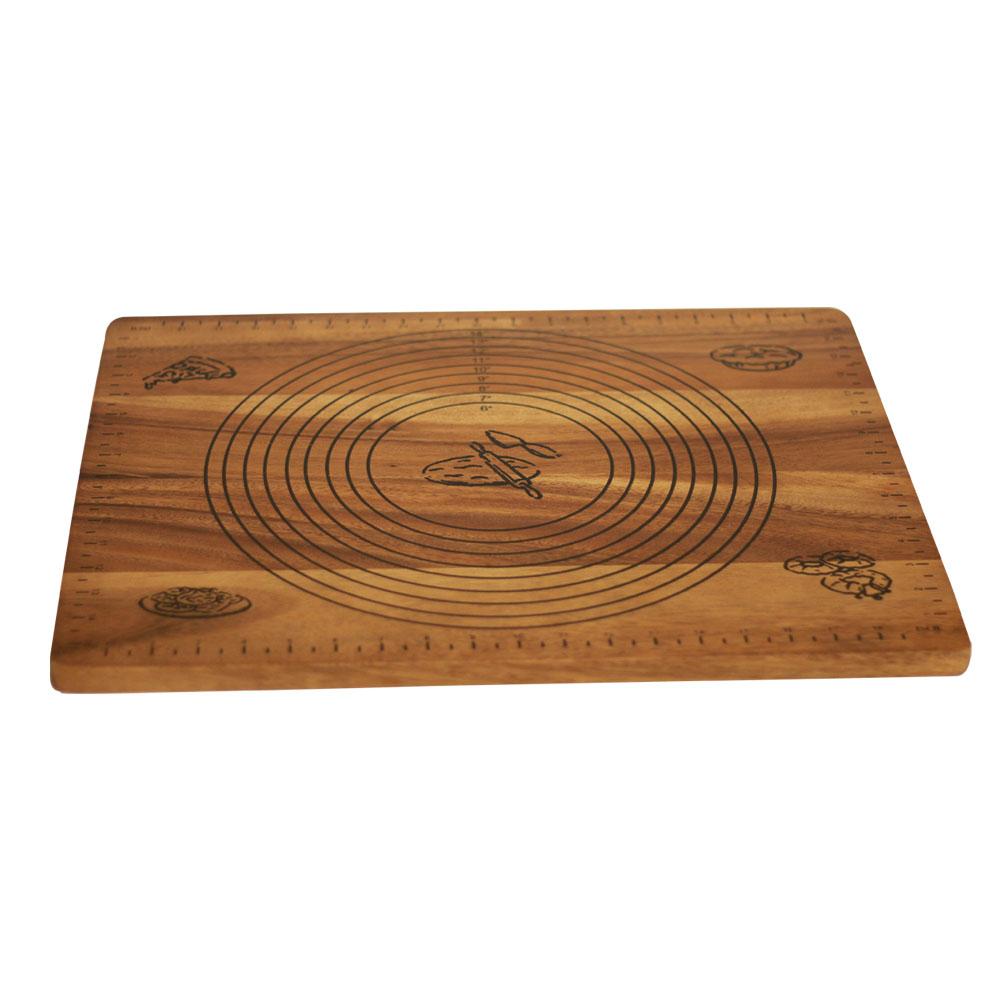
Classic Acacia Pastry Board with L-Lip
Features a precision 1.5-inch overhang lip to lock against countertop edges. Laser-engraved measurement grid available.

An in-depth engineering and commercial analysis tailored for kitchenware brand managers, supermarket buyers, hotel supply officers, and e-commerce importers seeking high-gain information on customized Acacia wooden pastry board manufacturing, non-slip counter lip integration, food safety compliance, and direct factory procurement in Thailand.
In the evolving global retail and HORECA (Hotel, Restaurant, and Catering) landscapes, the demand for natural, high-performance baking tools has experienced a unprecedented surge. Among these, the wooden pastry board has emerged from being a traditional artisanal tool into a central, high-volume hero product for commercial retail catalogs, boutique cookware brands, and culinary supply chains worldwide.
Unlike standard flat cutting boards, a professionally designed wooden pastry board engineered with a front counter lip (also known as a counter stopper) provides critical ergonomic stability during heavy dough kneading, rolling, and pastry shaping. Thermal retention properties inherent to dense natural hardwoods—specifically Thai-grown Acacia mangium and Acacia auriculiformis—maintain a micro-climate temperature ideal for pie crusts, croissant dough, sourdough, and laminated pastries. Marble surfaces can be excessively cold and heavy, causing butter separation or shipping fragility, while synthetic silicone mats lack structural rigidity, stain easily, and fail to satisfy consumer demand for eco-conscious kitchen aesthetics.
From an enterprise procurement perspective, sourcing custom OEM wooden pastry boards requires navigating precise manufacturing parameters: kiln-drying moisture control to prevent warping, non-toxic food-contact oil formulation, joint lamination shear strength, and export-compliant retail packaging. This technical guide synthesizes over two decades of direct OEM production expertise from Nineteen Intertrade Co., Ltd., empowering professional buyers to optimize product engineering, reduce warranty return rates, and capture expanding market share.
Acacia hardwood exhibits low thermal conductivity, enabling bakers to maintain consistent dough temperature without premature fat melting or gluten over-relaxation.
Kiln-dried down to 8%–12% moisture content (MC), preventing micro-cracking, surface cupping, and grain expansion under varied international humidity conditions.
High consumer value perception allows premium retail price points ($49–$129), yielding exceptional gross profit margins for brand owners and distributors.
Nineteen Intertrade offers full-spectrum OEM and private label manufacturing for custom wooden pastry boards. Below are our core commercial specifications currently distributed across North American, European, and Asia-Pacific retail networks.
Features a precision 1.5-inch overhang lip to lock against countertop edges. Laser-engraved measurement grid available.
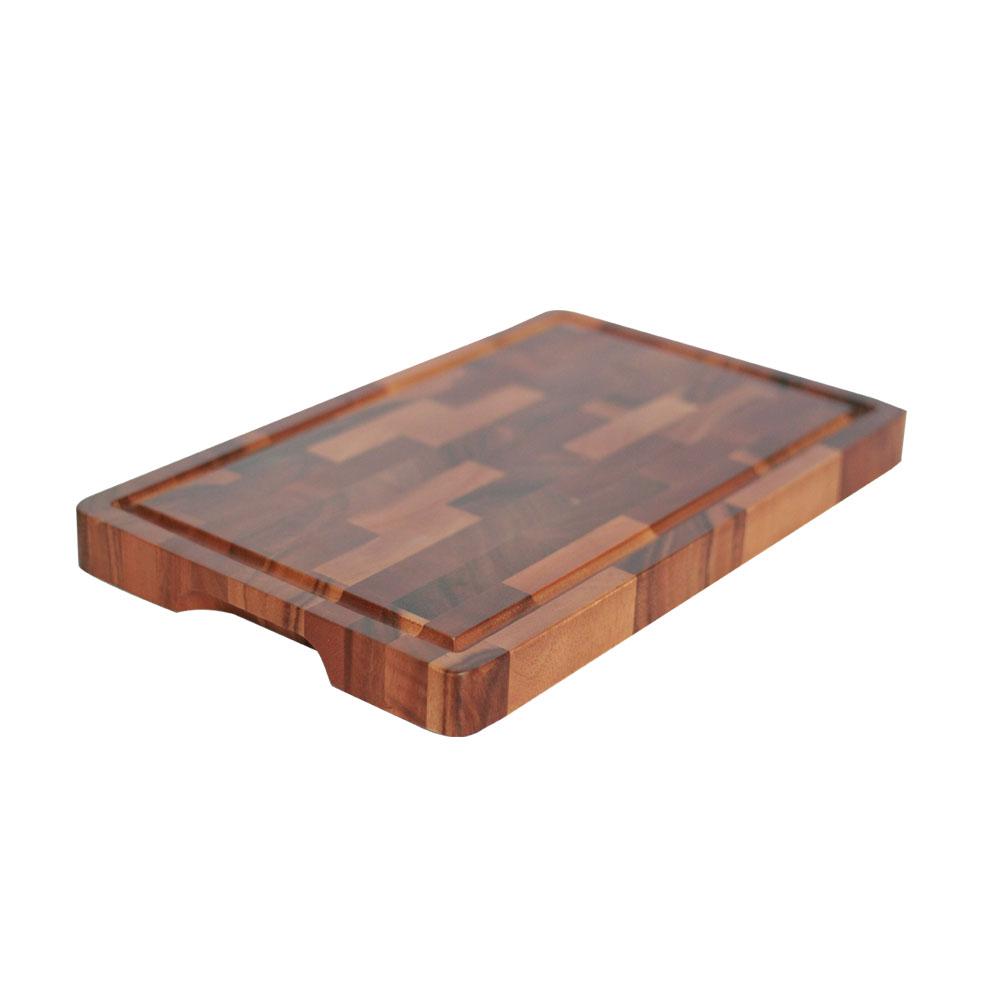
Heavy-duty self-healing end-grain construction. Built for commercial bakeries and high-end culinary enthusiasts.
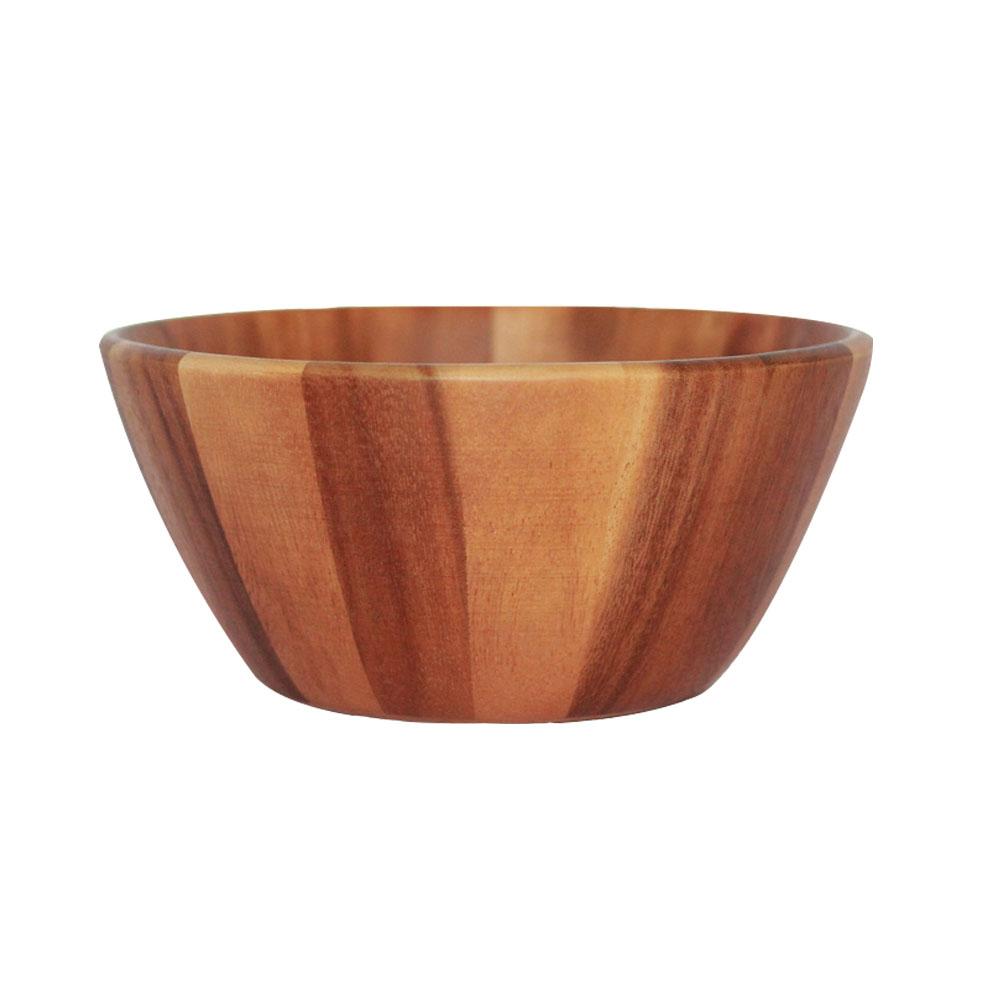
Integrated wooden pastry board accompanied by solid acacia ingredient bowls and French rolling pins.
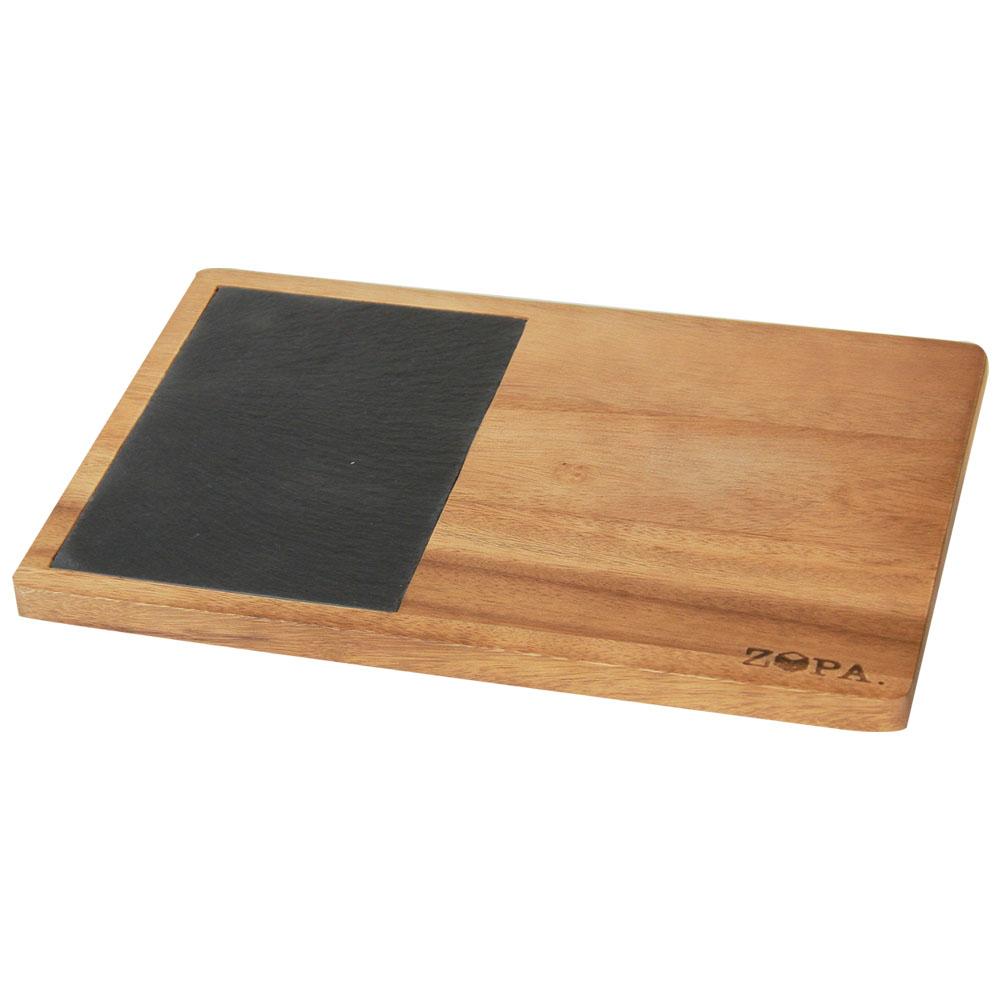
Dual-function surface: smooth side for dough rolling; juice-grooved reverse side for charcuterie presentation.
To streamline buyer inquiry evaluation, the table below outlines our standardized technical capabilities for custom bulk pastry board manufacturing:
| Parameter | Standard Specification | Custom OEM / Enterprise Options |
|---|---|---|
| Primary Hardwood | Thai Plantation Acacia (Acacia mangium) | Rubberwood, Teak, White Oak, Custom Combinations |
| Standard Dimensions | 24" x 18" x 0.75" / 28" x 22" x 1.0" | Custom sizes up to 36" length x 24" width |
| Construction Type | Edge-Grain Edge-Glued Lamination | End-Grain Block, Single Slab (Limited Sizing) |
| Moisture Content (MC) | Kiln-dried to 8% – 12% (ISO Standard) | Adjusted according to destination climatic profile |
| Surface Finish | 100% Food-Grade Mineral Oil + Natural Beeswax | LFGB / FDA compliant Organic Plant-based Oils |
| Feature Integration | Overhanging Front Lip, Rear Backsplash Rail | Laser Concentric Pie Circles, Ruler Markings, Handles |
| Branding Options | Laser Engraving, Hot Stamping, Metal Logo Inlay | Custom Retail Packaging, Barcode, Hangtag & Color Box |
| Compliance & Audit | SMETA 4-Pillar, FSC-C123456 Chain of Custody | FDA 21 CFR 175.300, EU Regulation No 1935/2004 |
Choosing the correct timber species is the single most critical structural and financial decision for kitchenware procurement managers. While domestic European Beech and North American Hard Maple have historically dominated Western markets, Thai Acacia wood has established itself as the premier global alternative due to its physical structural properties, sustainable fast-growth cycle, and striking aesthetic grain patterns.
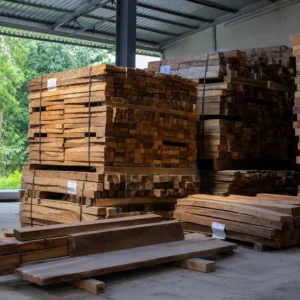
Acacia exhibits a high Janka Hardness rating (approx. 1,750 lbf), striking an optimal balance: it is hard enough to resist deep bench scraper scoring and knife cuts, yet soft enough not to dull dough cutters or alter delicate work surfaces. Its interlocking grain matrix naturally inhibits water absorption, dramatically lessening the risk of bacterial harboring and fiber expansion during washing.
Professional pastry chefs require a neutral thermal foundation. When rolling out laminated pastry dough (such as croissant layers containing interleaved butter blocks), surface friction generates micro-heat. High-density acacia wood acts as a thermal buffer, absorbing operational kinetic energy without heating the surface. This prevents butter breakdown (oiling out), ensuring distinct flaky layering in baked end products.
Producing a large-format wooden pastry board that remains flat, crack-free, and dimensionally pristine throughout transatlantic ocean transport requires rigorous factory discipline. At Nineteen Intertrade’s Bangkok facility, our production line integrates high-precision woodworking machinery with hands-on artisan quality control.
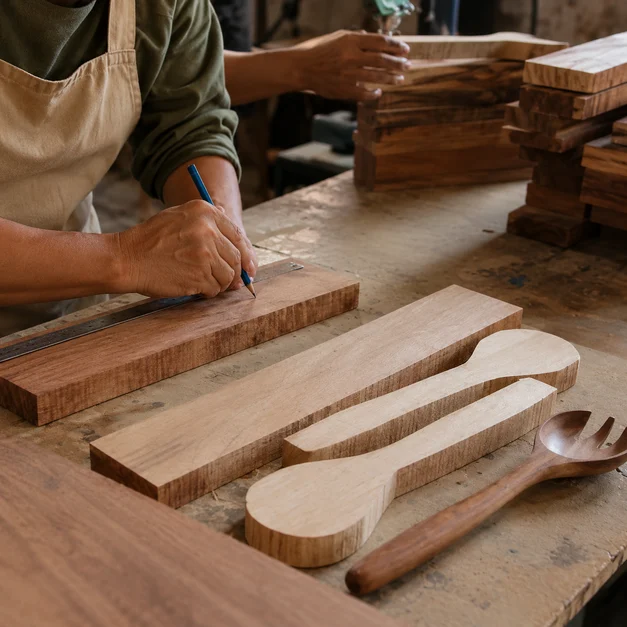
Rough-sawn acacia planks undergo automated 21-day computer-monitored kiln drying to stabilize moisture levels at 8–12%.
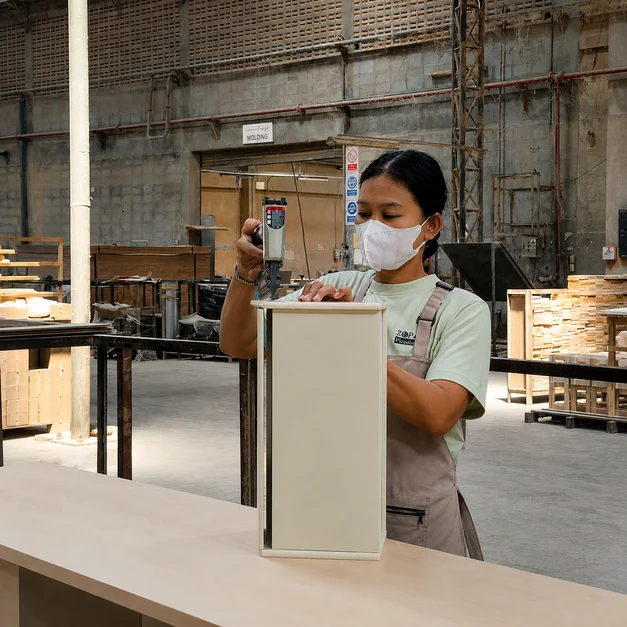
Planks are ripped into narrow staves. Opposing grain directions are alternated using FDA-approved D4 water-resistant adhesive.
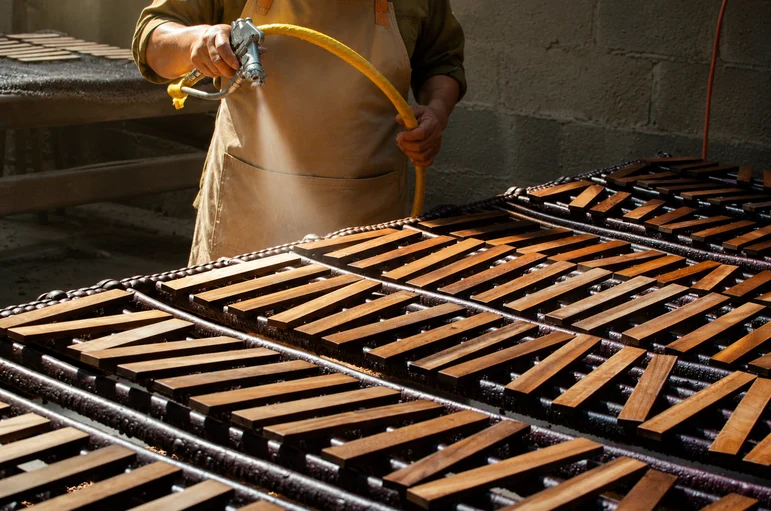
Automated CNC routers calibrate board thickness, carve ergonomic hand-grips, and mortise front lip counter-stoppers.
Concentric pastry diameter circles (6" to 14") and edge rulers are laser-etched before multi-stage 320-grit micro-sanding.
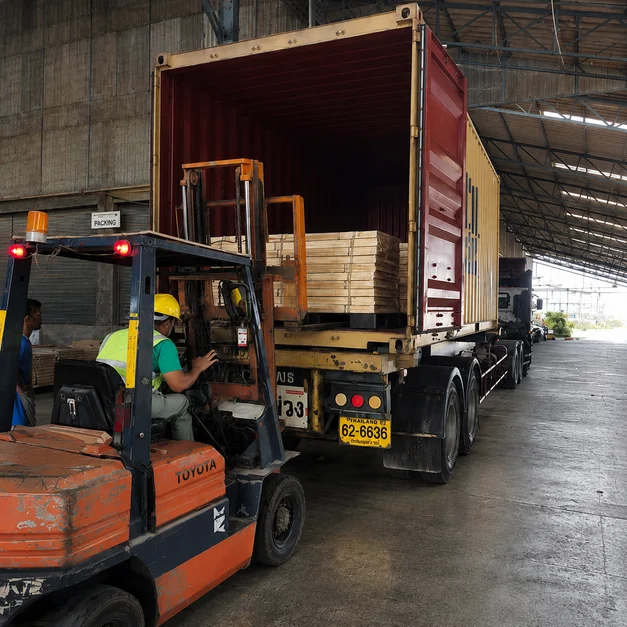
Deep immersion in organic mineral oil/beeswax blend, followed by shrink wrapping with desiccant packs for export protection.
As international regulatory frameworks tighten and consumer behavior shifts toward sustainable living, kitchenware procurement officers must align their sourcing strategies with four macro market trends:
Global brands are actively shifting woodenware production from Mainland China to Southeast Asian manufacturing hubs. Thailand offers significant tariff advantages under generalized preference systems, robust timber forestry logistics, and lower geopolitical risk profiles. Nineteen Intertrade provides a direct alternative for Western buyers aiming to diversify their OEM manufacturing bases without compromising quality or compliance.
Beginning in 2025, importers into the European Union must provide precise geolocation data proving that timber products did not originate from recently deforested land. Nineteen Intertrade's FSC-certified chain of custody ensures full traceability from sustainable Thai acacia plantations straight to your port of discharge.
Modern consumers in space-constrained urban environments demand multi-functional housewares. The single-use baking board is being replaced by hybrid models—featuring smooth dough-rolling surfaces on the front and deep juice grooves or slate accent cutouts on the back for charcuterie hosting. OEM buyers who specify dual-purpose designs report a 35% higher retail conversion rate.
Generic blank wooden boards are rapidly losing market share to functional baking workstations. Incorporating permanent laser-etched measurement guides (inches/centimeters, pie dough diameter rings, and biscuit grid lines) transforms a standard board into an indispensable precision baking tool.
Below are technical responses to the most common queries raised by category managers, QA auditors, and supply chain directors when evaluating wooden pastry board manufacturers.
The counter lip (overhang ledge) acts as a physical mechanical stop against the edge of the kitchen counter. When rolling heavy doughs or vigorously kneading bread, forward kinetic force pushes the board against the counter edge, completely eliminating slipping without requiring rubber feet or damp towels beneath the board. At Nineteen Intertrade, our counter lips are joined using tongue-and-groove or reinforced dowel lamination with Type-III water-resistant adhesives to withstand extreme lateral torque.
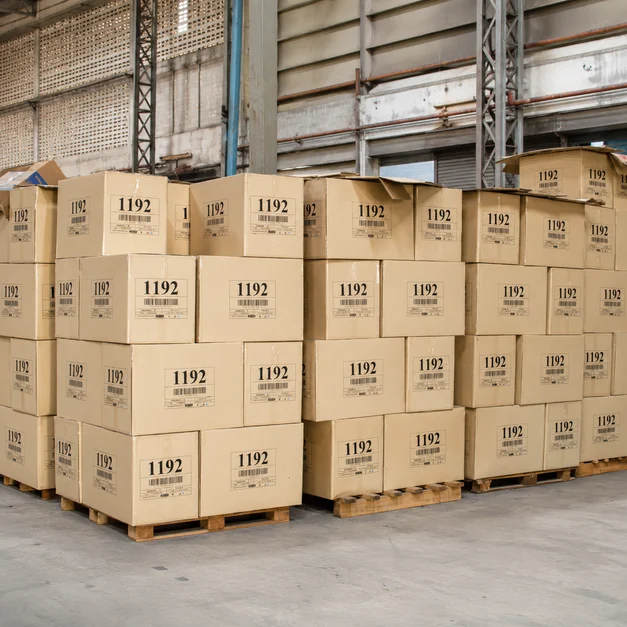
Warping occurs when uneven moisture exchange takes place between wood fibers and ambient air. We mitigate this through three engineered safeguards: 1) Automated kiln-drying down to an exact 8%–12% equilibrium moisture content; 2) Alternating annual ring grain orientations during stave lamination to equalize internal tension forces; and 3) Deep-soak food-grade mineral oil sealing combined with individual poly-shrink wrapping containing food-safe silica desiccant packets inside master export cartons.
Our manufacturing plant operates in full compliance with international standards. Our wood sources can be certified under FSC (Forest Stewardship Council) Chain of Custody. Our oil finishes and adhesives are tested and certified compliant with US FDA 21 CFR 175.300 standards and European Union LFGB (EU No 1935/2004) food-contact regulations. Furthermore, our factory facility is SMETA (Sedex Members Ethical Trade Audit) audited for social compliance and labor standards.
Our standard Minimum Order Quantity (MOQ) for custom OEM/private label wooden pastry boards is 500 units per design SKU. For established retail chains or mixed-container orders combining multiple wooden kitchenware items (such as cutting boards, salad bowls, and butcher blocks), we offer flexible volume tiered pricing and lower per-item MOQs.
Yes. We offer complete OEM turn-key customization. Our high-precision CO2 laser engravers can etch intricate measurement grids, pie slice guides, brand logos, and care instructions directly onto the wood surface. For retail packaging, we offer custom-printed sleeve wraps, full-color gift boxes, barcode sticker application, inner corner guards, and drop-test certified master cartons.
Wooden pastry boards must never be submerged in water or cleaned in commercial dishwashers. After use, surface flour should be scraped off with a bench scraper, followed by wiping down with a damp cloth and mild antibacterial soap. The board should be dried vertically at room temperature. Regular re-conditioning with food-grade mineral oil or beeswax cream every 3–4 weeks preserves moisture sealing and keeps the wood grain rich and resilient.
With over two decades of dedicated wood manufacturing experience in Thailand, Nineteen Intertrade Co., Ltd. has established an unshakeable reputation for engineering excellence, ethical production, and supply chain reliability. Our modern production complex in Bangkok operates with strict quality management protocols designed specifically for high-end international markets.
Spanning tens of thousands of square meters, our facility houses specialized timber drying kilns, multi-axis CNC machines, automated sanding lines, and eco-friendly oil treatment stations. We process premium acacia, teak, rubberwood, and imported hardwoods under one roof, guaranteeing complete oversight over every phase of production.
Our commitment to sustainability is backed by FSC-certified raw material sourcing, ensuring zero contribution to illegal logging or deforestation. When you partner with Nineteen Intertrade, you are securing a direct factory relationship backed by professional international trade managers fluent in English and export compliance documentation.
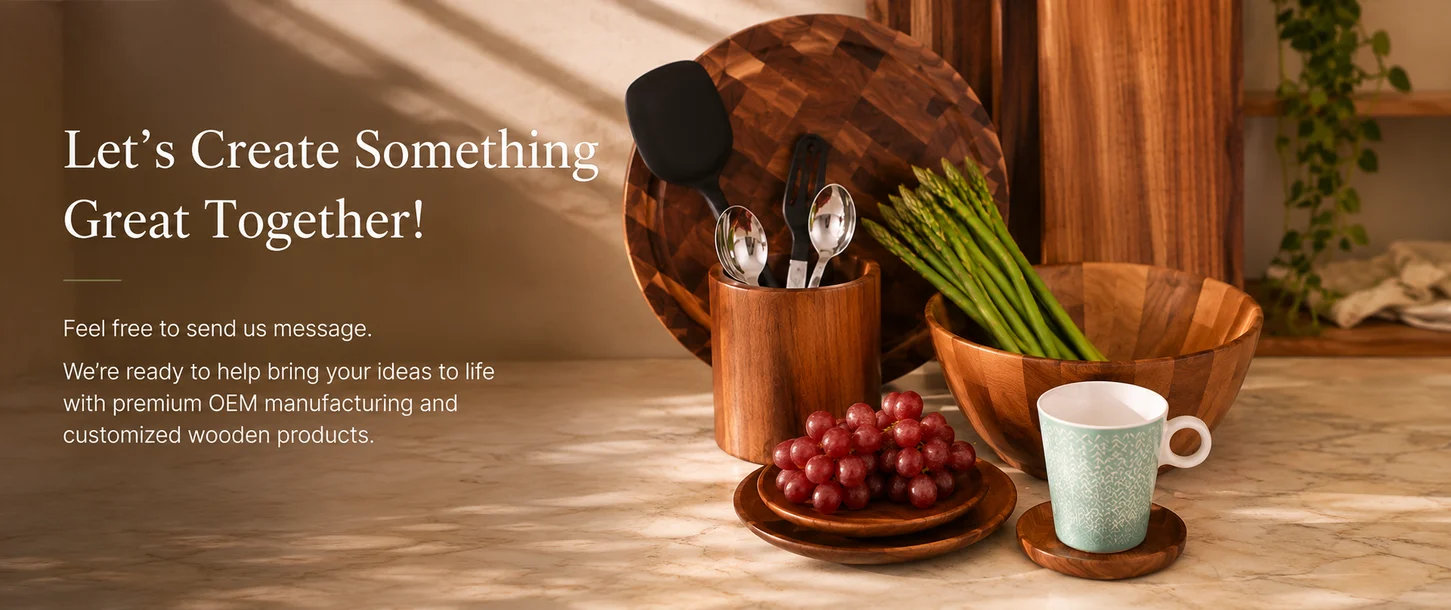
Our engineering and export sales teams are ready to assist you with material selection, technical drawings, sample prototyping, and competitive wholesale pricing.
Get Catalog