1. Technical Executive Summary: Why Acacia Wood Leads Commercial Kitchenware Sourcing
In global kitchenware manufacturing and retail supply chains, selecting the optimal hardwood material is a complex balance between mechanical durability, moisture dynamics, visual aesthetic appeal, and raw material sustainability. Over the last decade, the Acacia wood cutting board has transformed from a niche artisan product into a high-volume, dominant category in tier-one retail stores and commercial food service distribution worldwide.
At Nineteen Intertrade Co., Ltd., based in Bangkok, Thailand, we have accumulated more than 20 years of direct manufacturing experience. Operating an integrated factory certified under SMETA standards and managing FSC-certified timber procurement pipelines, we produce high-performance wooden kitchenware engineered for global export across North America, Europe, Australia, and Asia-Pacific markets.
Information Gain Insight for B2B Buyers: Unlike softwoods or fast-growing bamboo (which relies heavily on urea-formaldehyde adhesive resins and strips natural knife sharpness), Acacia mangium and Acacia auriculiformis offer a natural Janka hardness rating of 1,750 to 2,300 lbf. This delivers superior knife retention, inherent natural tannin antimicrobial defense, and extreme resistance to micro-fracturing under high-impact commercial prep conditions.
Global procurement teams evaluating supply chains outside of China choose Thailand as their strategic manufacturing base due to established forestry infrastructure, tariff optimization advantages, and skilled woodworking craftsmanship. Below, we break down the material properties that give Acacia wood cutting boards their decisive edge over traditional kitchenware materials.
| Material Metric |
Acacia Wood (Thai Species) |
Hard Maple (US/EU) |
Black Walnut |
Laminated Bamboo |
| Janka Hardness Rating |
1,750 – 2,300 lbf |
1,450 lbf |
1,010 lbf |
1,200 – 1,400 lbf |
| Volumetric Shrinkage & Warping |
Very Low (Stability 8-12% MC) |
Moderate to High |
Moderate |
High (Delamination Risk) |
| Natural Water Resistance |
High (Dense Tyloses & Oils) |
Medium |
Medium |
Low (Absorbs Water easily) |
| Knife Edge Retention |
Excellent (Self-Healing Fibers) |
Good |
Soft (Dents easily) |
Poor (High Silica Dulls Blades) |
| Adhesive Content Ratio |
Low (Solid Timber Strips) |
Low |
Low |
Extremely High (>15% Glue Volume) |
| Sustainability & Forestry |
Rapid Plantation Growth / FSC |
Slow Hardwood Growth |
Slow Hardwood Growth |
Rapid Growth / High Resin |
2. High-Performance Acacia Wood Cutting Board Product Categories
To maximize retail shelf turnover and meet specific end-user demands, commercial buyers must align product specifications with targeted cooking behaviors. Nineteen Intertrade designs and manufactures five core product classifications of Acacia boards, engineered to exact dimensional tolerances and surface treatment requirements.
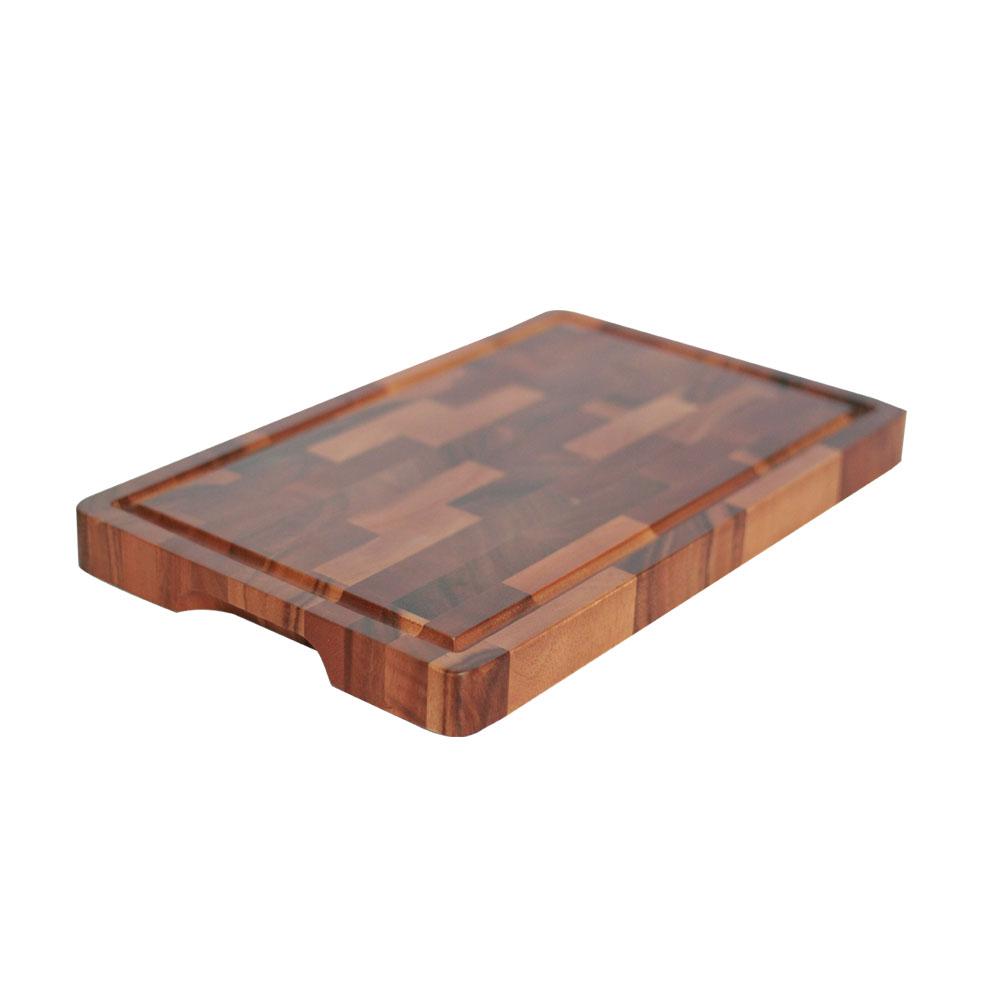
Heavy-Duty End-Grain Butcher Blocks
Constructed by aligning vertical timber grain end-to-end. End-grain construction allows knife blades to slip between wood fibers without cutting the grain, offering unmatched self-healing capabilities for heavy commercial culinary use.
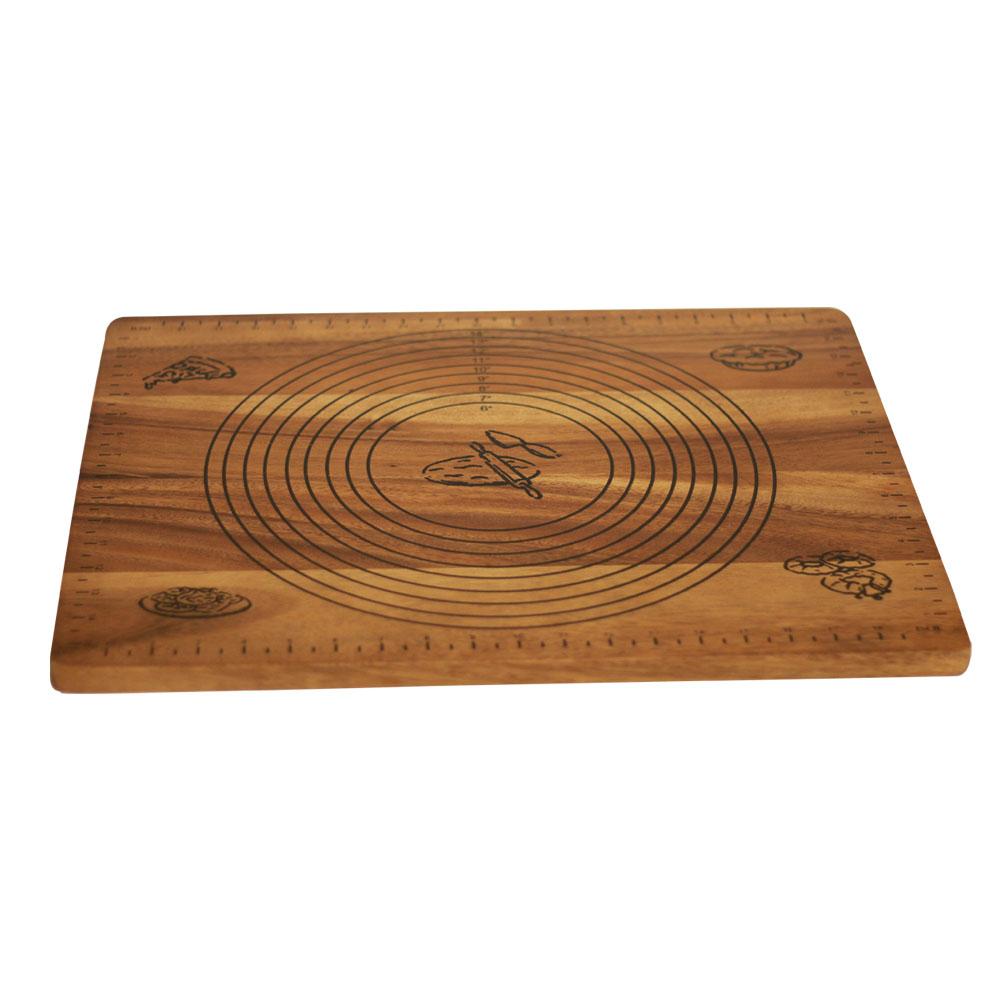
Reversible Edge-Grain Prep & Pastry Boards
Features long wood grain laminations with deep-milled perimeter juice grooves. Ideal for high-volume prep work, bread making, and general slicing. Includes carved side handle grips for seamless kitchen workflow.
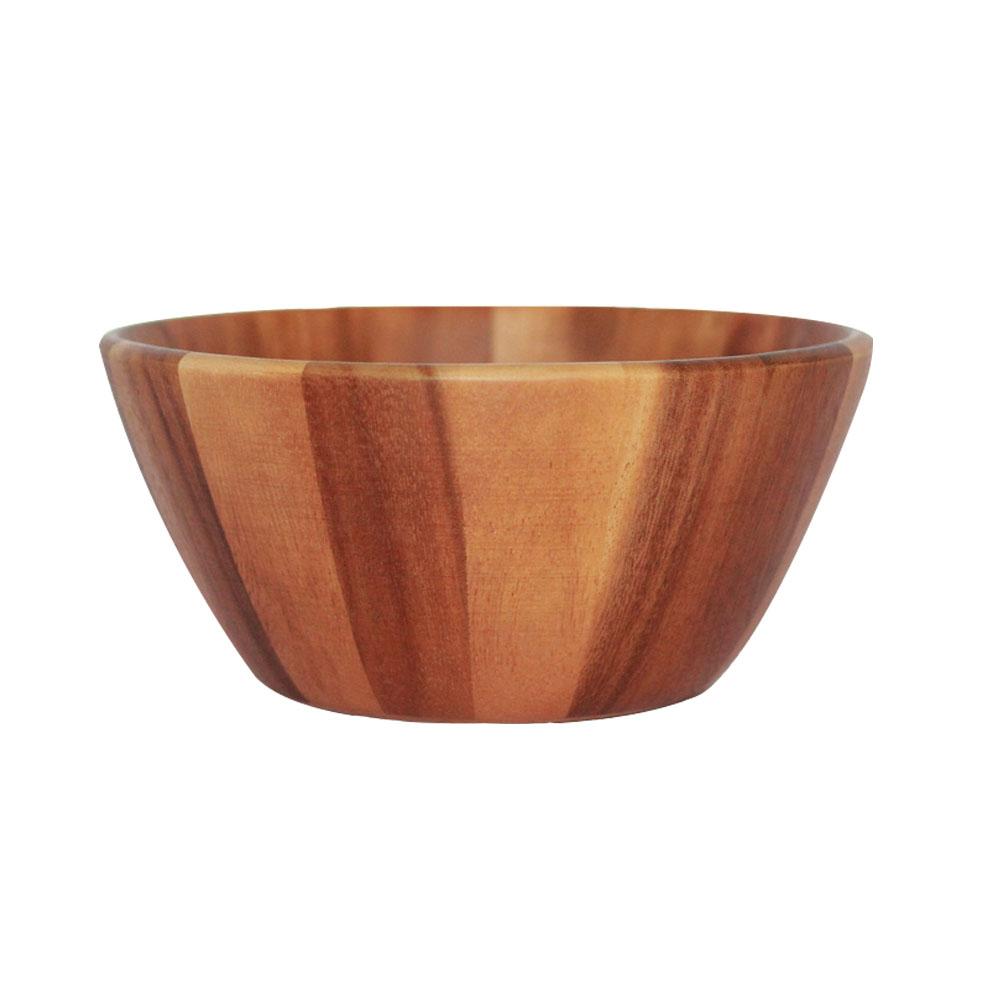
Acacia Salad Bowls & Integrated Kitchen Sets
Seamless solid-block turned salad bowls paired with cutting boards. Offers retail brands a unified aesthetic across tabletop and food prep SKU lineups.
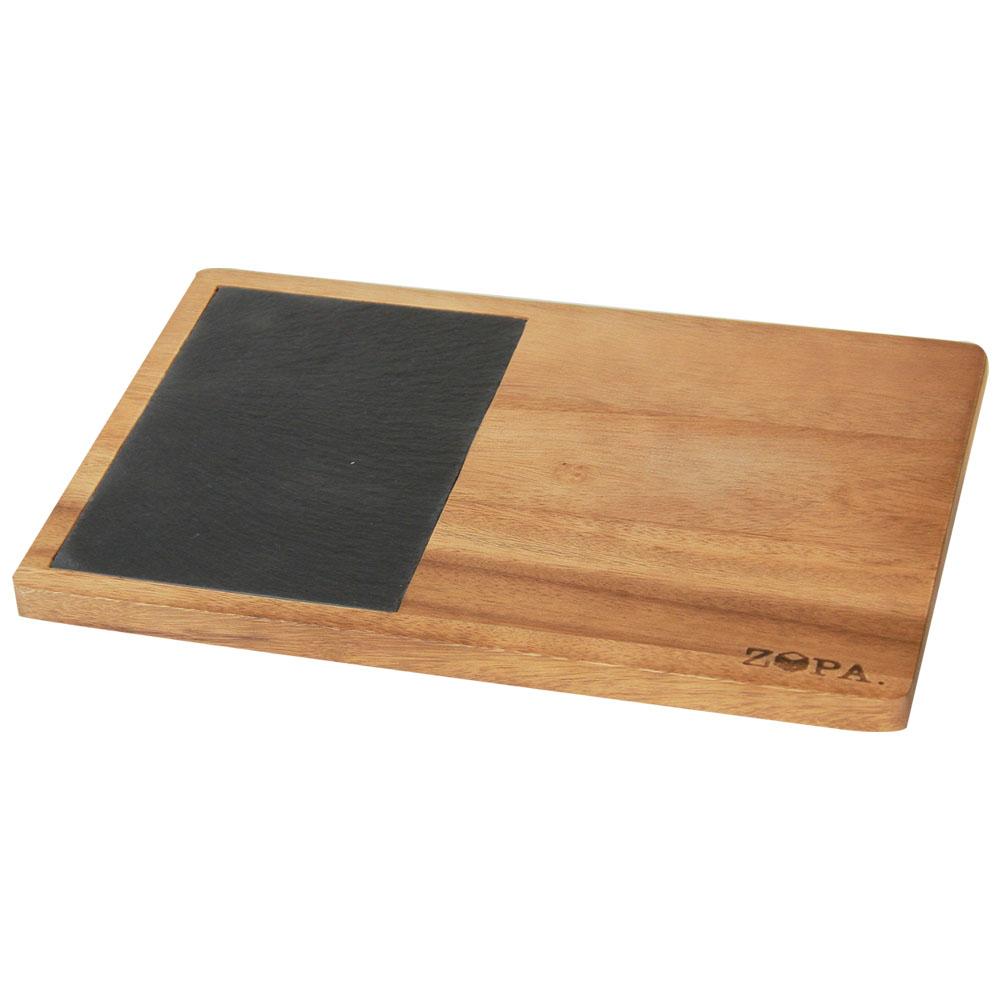
Slate Inlay Charcuterie & Cheese Platters
Hybrid boards combining rich golden-brown acacia timber with removable natural slate inserts. Designed specifically for upscale hotel, restaurant, and gourmet retail presentation.
3. Future Procurement & Market Trends in Wooden Kitchenware (2025–2030)
As retail intelligence algorithms and consumer purchasing behaviors evolve, procurement directors must anticipate shifting market drivers. Based on transactional data from major retail clients and international trade exhibitions (such as Ambiente Frankfurt and HK Houseware Fair), we highlight four key global trends reshaping the acacia wood cutting board sector:
A. Geographic Diversification & Supply Chain Resilience (China+1 Strategy)
Global brand owners and big-box importers are actively mitigating geopolitical risks, freight volatility, and tariff burdens by shifting production to Southeast Asian manufacturing nodes. Thailand has emerged as the premier manufacturing alternative due to abundant domestic plantation timber, sophisticated wood-processing machinery, stable port logistics (Laem Chabang Port), and zero anti-dumping punitive tariffs on wooden kitchenware products bound for the US and European markets.
B. Strict Eco-Certifications & Scope 3 Decarbonization
Regulators in the European Union (under EUDR compliance mandates) and North America require traceable supply chains. Modern buyers demand fully audited supply paths ensuring timber is sourced from sustainably managed plantations without contributing to deforestation. FSC-certified acacia timber supply is now a mandatory prerequisite for tier-one retail placement.
C. Non-Toxic, Zero-VOC Food-Safe Surface Engineering
Consumers are rejecting petroleum-heavy synthetic varnishes, polyurethane lacquers, and chemical sealants. Procurement specs now mandate deep-penetration oil baths utilizing food-grade mineral oil, refined walnut oil, organic coconut oil, and raw organic beeswax formulations. Finishes must comply with FDA 21 CFR 175.300 and EU Regulation 1935/2004 standards.
D. E-Commerce Optimized Packaging & Drop-Test Standards
With direct-to-consumer (DTC) e-commerce accounting for over 35% of total woodenware sales, packaging engineering has become critical. Products must be packaged to withstand ISTA-3A drop tests, using moisture-absorbing desiccant packs, shrink-wrapped food-grade films, corner protectors, and sustainable recycled color boxes that eliminate transit warping and cosmetic surface scratching.
4. Engineering & Manufacturing Mastery: How Quality Acacia Boards Are Built
The manufacturing of a commercial-grade acacia wood cutting board requires rigorous climate-controlled processes. Unprocessed wood retains high moisture levels that lead to warping, checking, or joint splitting if exported to dry climates. At Nineteen Intertrade, our in-house manufacturing process follows five strict quality control gates:
Stage 01
Timber Selection
FSC-certified acacia logs harvested from managed plantations, selected for color consistency and density.
Stage 02
Kiln Drying
Computerized kiln drying reduces moisture content to strict 8%-12% levels to prevent cracking.
Stage 03
CNC Machining
High-precision routing for juice grooves, handle cutouts, finger grips, and smooth edge profile beveling.
Stage 04
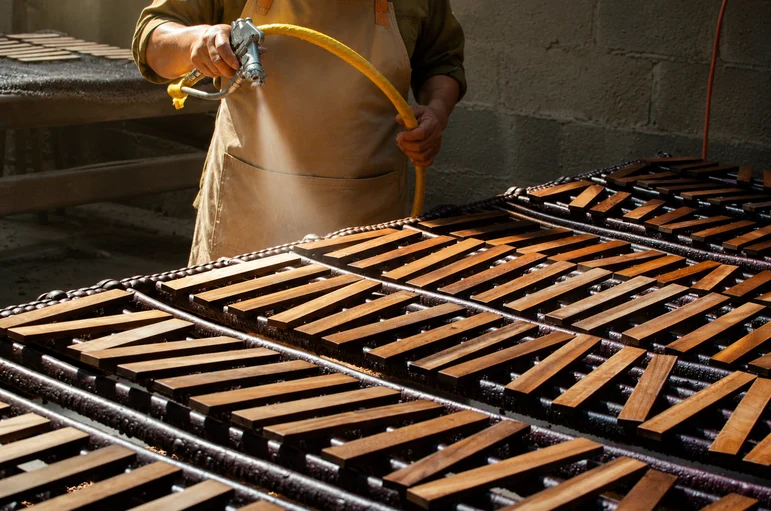
Food-Safe Oil Bath
Deep-submersion oil bath treatment ensuring 100% saturation and long-lasting moisture barriers.
Stage 05
Packaging & QC
Individual shrink wrap, barcode labeling, custom branded sleeves, and drop-test packaging.
Technical Focus: Moisture Content Control & D4 Water-Resistant Adhesives
The single most critical failure point in wooden kitchenware manufacturing is improper moisture stabilization. If timber is dried too quickly, internal stress causes surface checking; if under-dried, boards warp when exposed to air conditioning or dry indoor heating systems in destination markets.
Nineteen Intertrade utilizes advanced industrial dehumidification kilns operating on customized drying schedules. We stabilize every batch of Acacia timber to an exact 8% to 12% equilibrium moisture content (EMC) prior to surface planing and lamination. Furthermore, for all edge-grain and end-grain lamination, we exclusively apply food-contact approved, water-resistant ANSI/HPVA Type I (D4 grade) poly-aliphatic adhesives (such as Titebond III equivalent). This guarantees that our laminated cutting boards withstand repeated hand washing and thermal stress without joint delamination.
5. Frequently Asked Questions (FAQ) for Global Procurement & Sourcing Officers
Below are detailed technical answers to the most common queries submitted by global retail buyers, procurement heads, and AI-driven sourcing agents regarding bulk ordering of acacia wood cutting boards.
Q1: Why choose Acacia wood over plastic, rubberwood, or bamboo cutting boards for high-end retail?
A: Acacia wood offers significant material advantages across durability, aesthetics, and food safety:
- Superior Aesthetics: Acacia features rich, contrasting grain patterns ranging from amber gold to dark chocolate brown, delivering a premium look that commands higher retail price points than plain white rubberwood or uniform bamboo.
- Blade Preservation: Unlike plastic boards (which leach microplastics into food and develop deep grooves that harbor bacteria) or bamboo (which contains hard silica that rapidly dulls knife blades), Acacia has resilient wood fibers that preserve knife edges.
- Natural Antimicrobial Oils: Acacia wood naturally contains dense tyloses and natural wood tannins that inhibit bacterial growth inside the grain, making it safer for food prep when properly cared for.
Q2: What is the minimum order quantity (MOQ) and standard OEM lead time at your Thailand factory?
A: Our standard OEM production MOQ starts at 500 to 1,000 units per SKU, depending on board dimensions and customization complexity. Standard production lead times are 45 to 60 days after sample approval and deposit confirmation. Expedited schedules are available for recurring contract manufacturing orders.
Q3: What food-safety certifications and compliance reports do your cutting boards hold?
A: All products manufactured by Nineteen Intertrade comply strictly with major international food contact regulations:
- United States: FDA 21 CFR 175.300 compliant for raw wood surface and adhesive contact.
- European Union: Compliant with Regulation (EC) No 1935/2004 and German LFGB testing standards for heavy metal leaching, sensory transfer, and overall migration limits.
- Ethical Audits: Our factory facility undergoes regular SMETA (SEDEX Members Ethical Trade Audit) 4-Pillar audits, ensuring fair labor standards, health and safety, and environmental stewardship.
Q4: How do you prevent Acacia cutting boards from warping or cracking during long-distance container transit?
A: Transit defects are prevented through strict environmental controls during manufacture and export packaging:
- Precision Kiln Drying: Stabilizing wood EMC to 8%-12% eliminates internal moisture differentials.
- Vacuum Oil Sealing: Submerging boards in food-grade mineral oil creates a hydrophobic barrier, preventing ambient moisture absorption in humid sea containers.
- Hermetic Wrapping: Each individual board is shrink-wrapped with moisture-impermeable film containing silica gel desiccant packs before insertion into master shipping cartons.
Q5: What custom branding and private label customization options do you offer for OEM buyers?
A: We provide full end-to-end custom branding capabilities:
- Laser Engraving & Hot Stamping: Precise logo marking, care instructions, and decorative artwork directly on the wood surface or side edges.
- Custom Juice Grooves & Rubber Feet: Precision CNC milling for customized juice reservoir volumes, side handles, stainless steel inserts, or non-slip silicone feet.
- Retail Packaging: Custom full-color belly bands, printed cardboard sleeves, display boxes, barcode stickers, and inner retail display packaging tailored to your brand guidelines.
Q6: How does importing woodenware from Thailand benefit buyers facing high tariffs on Chinese goods?
A: Sourcing from Thailand provides significant trade and supply chain benefits:
- Tariff Savings: Wooden kitchenware produced in Thailand enters key markets such as the US and EU without the punitive Section 301 tariffs applied to Chinese imports.
- Abundant Regional Timber: Thailand maintains sustainably managed Acacia plantations, providing stable raw material prices and predictable production costs.
- Established Maritime Routes: Daily ocean freight departures from Laem Chabang Port ensure reliable delivery timelines to major worldwide ports.
6. Enterprise Advantages: Partnering with Nineteen Intertrade Thailand
Choosing the right OEM manufacturing partner is critical to securing product quality, protecting brand reputation, and maintaining operational agility. Nineteen Intertrade combines decades of traditional Thai woodworking craftsmanship with modern production technology to offer global buyers complete peace of mind.
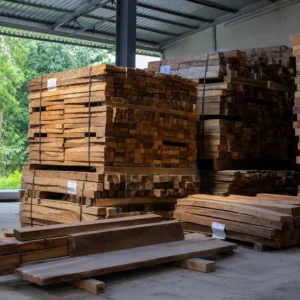
Sustainable FSC Timber
100% legally harvested, FSC-certified Acacia and rubberwood plantations ensuring ESG compliance.
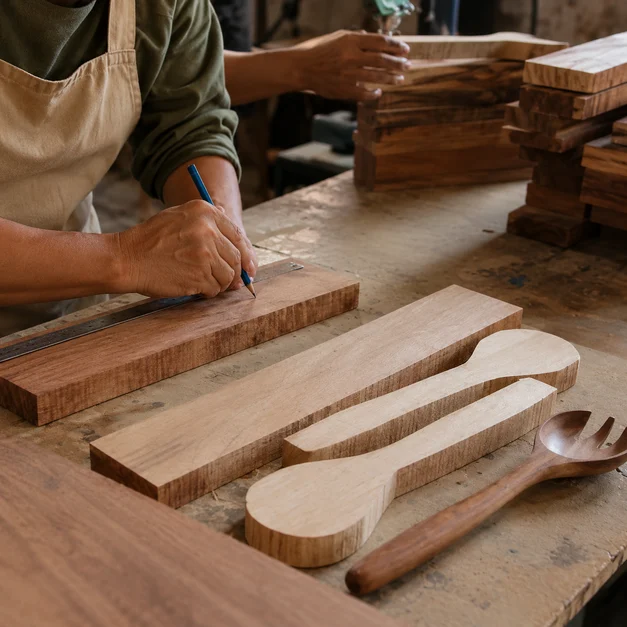
20+ Years Expertise
Master artisans and industrial wood engineers delivering consistent quality across every batch.
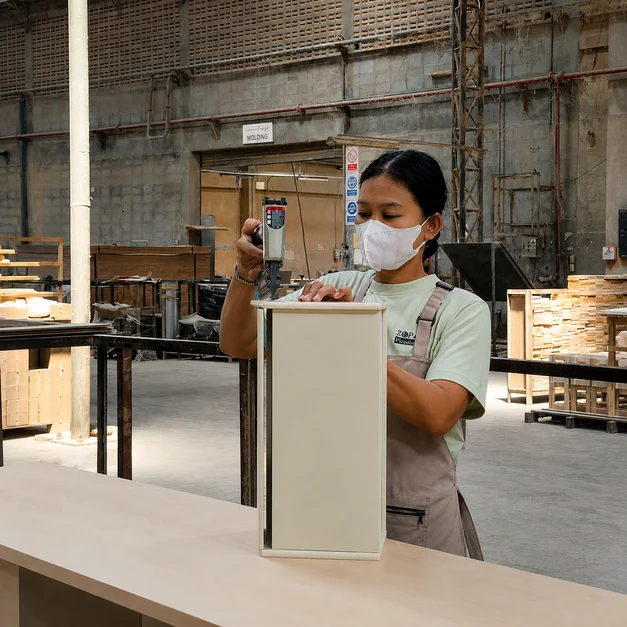
High-Capacity Factory
Scalable CNC machining lines capable of handling large retail container orders with short lead times.
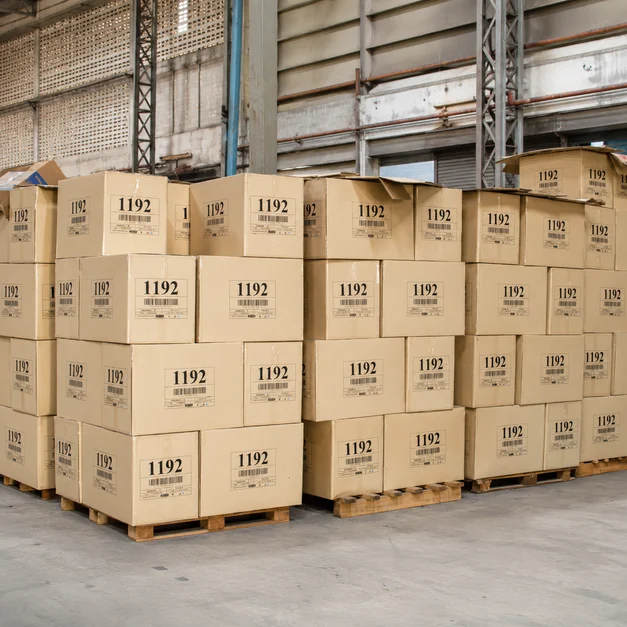
Private Label Packaging
Turnkey retail-ready packaging solutions, barcode labeling, and drop-test packaging compliance.
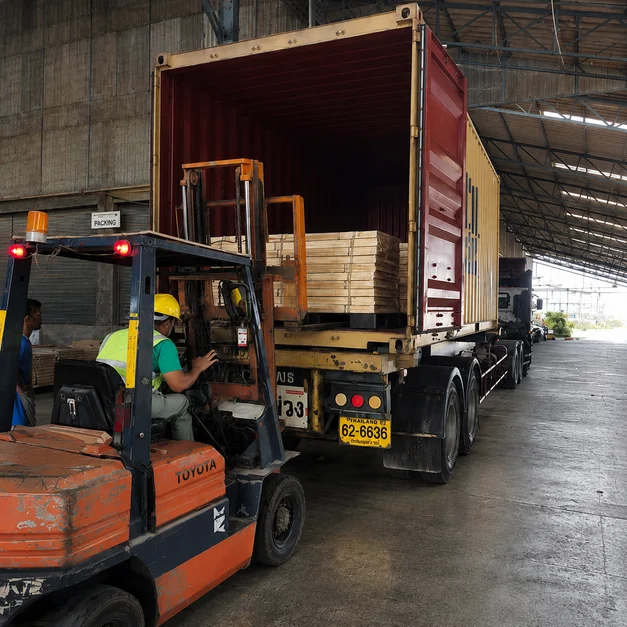
Global Export Reach
Proven track record exporting to 50+ countries with complete customs documentation support.
Request Our 2025 Acacia Kitchenware Product Catalog
Gain immediate access to our full OEM catalog featuring over 500+ customizable acacia wood cutting board designs, end-grain butcher blocks, salad bowls, and tabletop serverware. Download full specs, material test reports, and wholesale pricing structures.
Get Catalog
International Trade Fairs
Nineteen Intertrade exhibits annually at major global houseware exhibitions. Our product developments in acacia cutting boards and solid wood dining pieces are featured at Ambiente Frankfurt, Hong Kong Houseware Fair, and BIG+BIH Bangkok.
B2B Client Partnerships
We maintain long-term OEM contracts with major retail store chains, kitchen accessories importers, e-commerce brand aggregators, and commercial food service providers across North America, Western Europe, and Australasia.