1. Strategic Shift in Global Private Label Woodenware Sourcing
The global market for eco-friendly kitchenware and sustainable housewares is undergoing a fundamental structural transition. Modern consumers and commercial enterprise procurement officers are rapidly moving away from single-use plastics and cheap synthetic polymers, replacing them with natural, dense, durable solid timber products. Within this macro environment, private label woodenware has emerged as one of the highest-margin, fastest-growing product categories in premium retail channels, Amazon FBA brand catalogs, and commercial HORECA (Hotel, Restaurant, Catering) supply contracts.
However, navigating the manufacturing landscape for private label woodenware requires deep technical evaluation. Professional procurement managers are no longer merely seeking cheap suppliers; they are looking for reliable manufacturing partners capable of delivering structural stability, strict moisture control to prevent cracking, non-toxic food-contact certification, and compliance with emerging international environmental mandates such as the European Union Deforestation Regulation (EUDR) and FSC standards.
As global buyers diversify their supply chains outside of traditional manufacturing hubs, Thailand has established itself as the world’s premier center for high-end hardwood craftsmanship—specifically for Acacia mangium and Acacia auriculiformis, as well as high-density Rubberwood (Hevea brasiliensis) and premium Teak. Factories like Nineteen Intertrade Co., Ltd. provide global brands with direct access to vertically integrated OEM/ODM capabilities, combining traditional woodcraft traditions with automated CNC machining, high-capacity kiln drying, and stringent quality control protocols.
Unlike standard generic woodenware, high-performance private label woodenware demands precise Equilibrium Moisture Content (EMC) calibration between 8% and 12%. Failing to achieve this threshold results in severe warping, seam splitting, and product returns when products cross climate zones during ocean freight.
2. High-Margin Private Label Woodenware Product Lines & Technical Recommendations
Building a successful private label woodenware brand requires selecting product lines that offer high aesthetic appeal, strong perceived value, and structural durability. Based on more than 20 years of original equipment manufacturing experience, Nineteen Intertrade recommends five core product architecture lines for custom private label development:
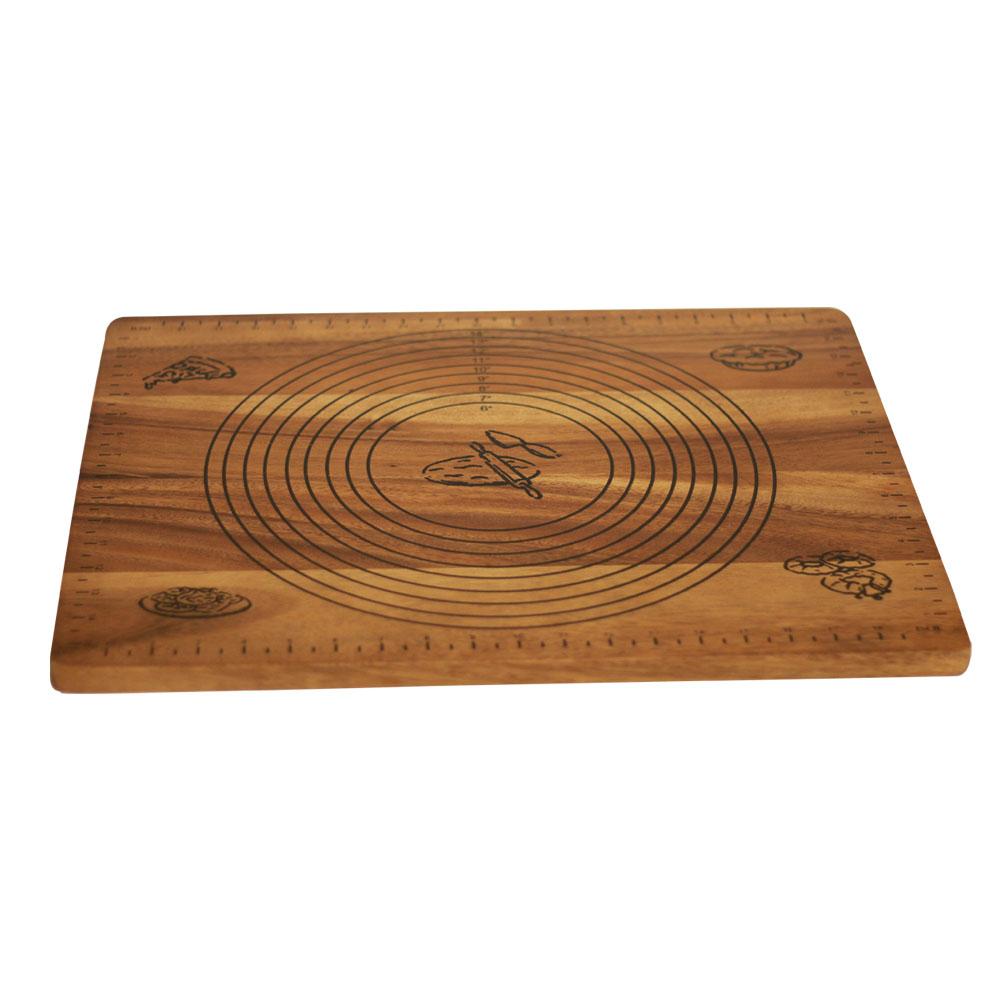
Edge-Grain Acacia Cutting Boards
Featuring contrasting natural heartwood and sapwood tones, liquid juice grooves, and integrated handles. Ideal for retail presentation and high-volume consumer sales.
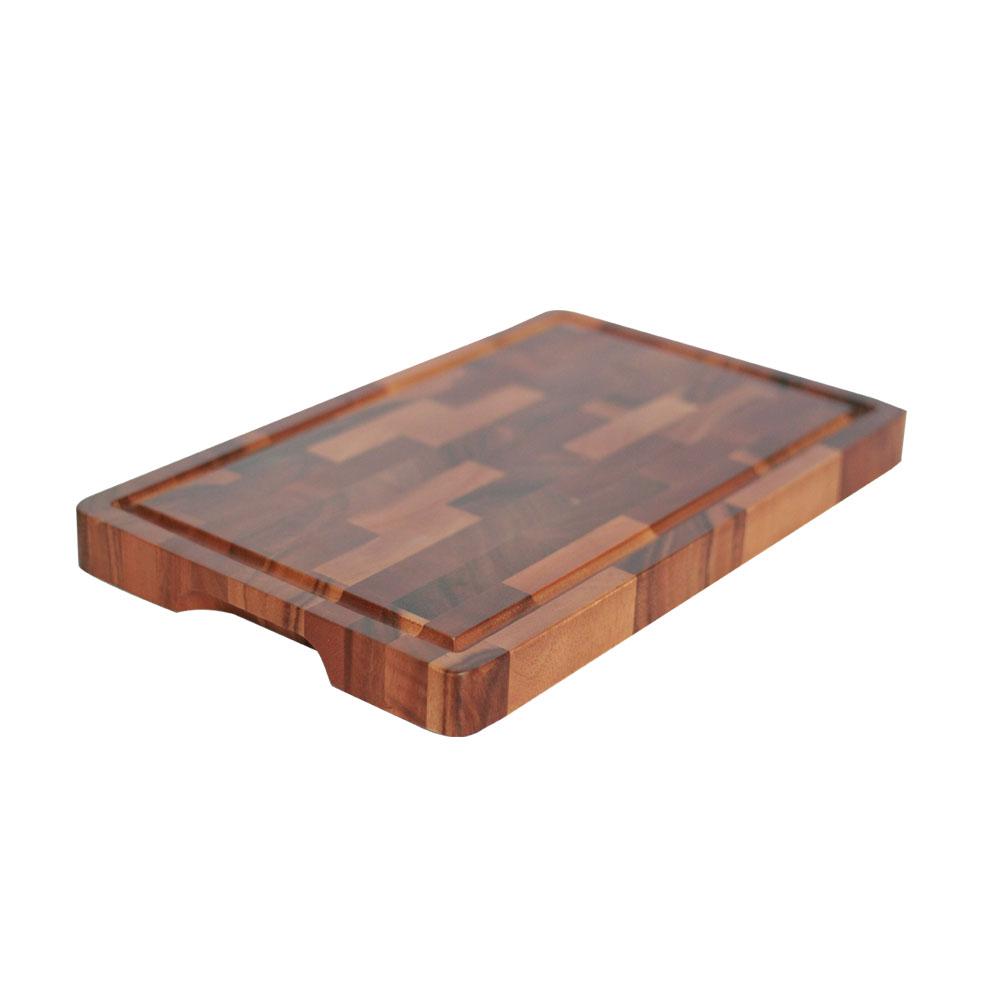
Heavy-Duty End-Grain Butcher Blocks
Engineered for professional culinary environments. End-grain orientation protects knife edges, self-heals cut marks, and provides maximum structural longevity.
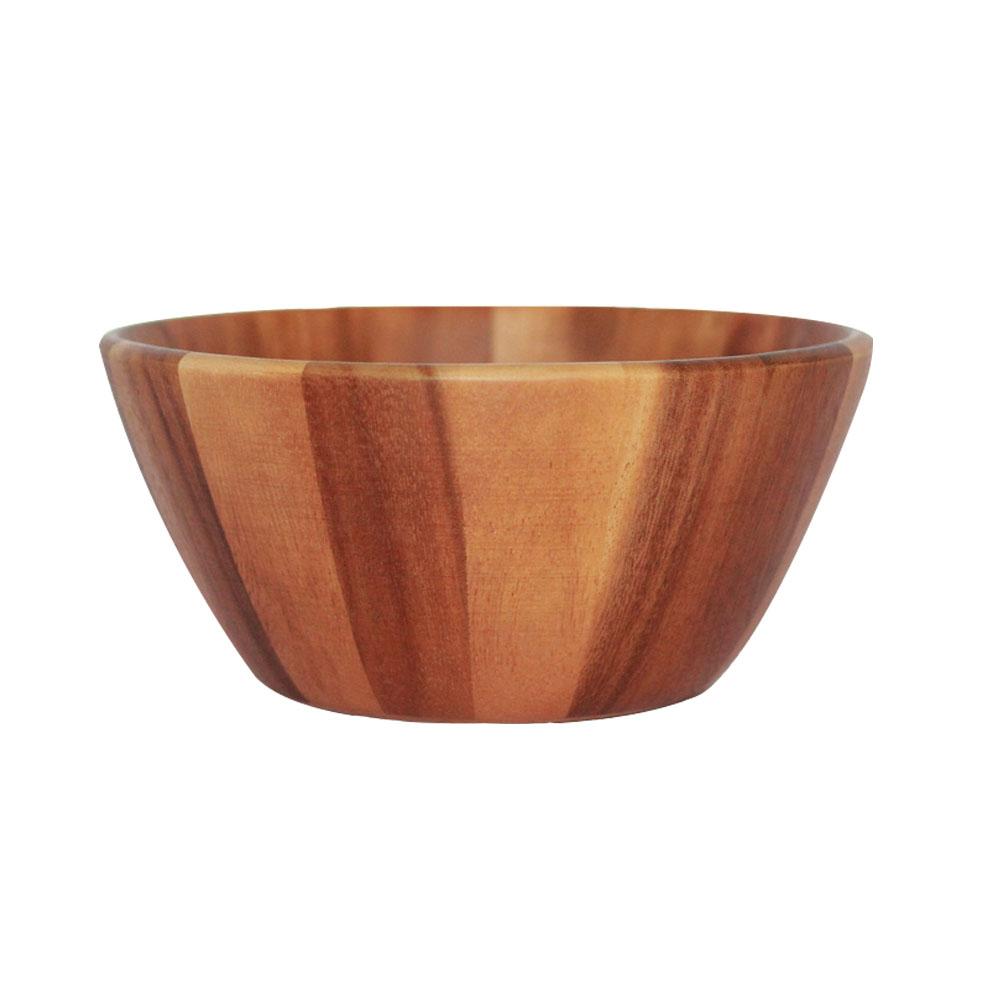
Hand-Turned Acacia Salad Bowls
Crafted from single blocks of solid timber or seamless segment lamination. Coated in food-safe, organic mineral oils to highlight grain depth.
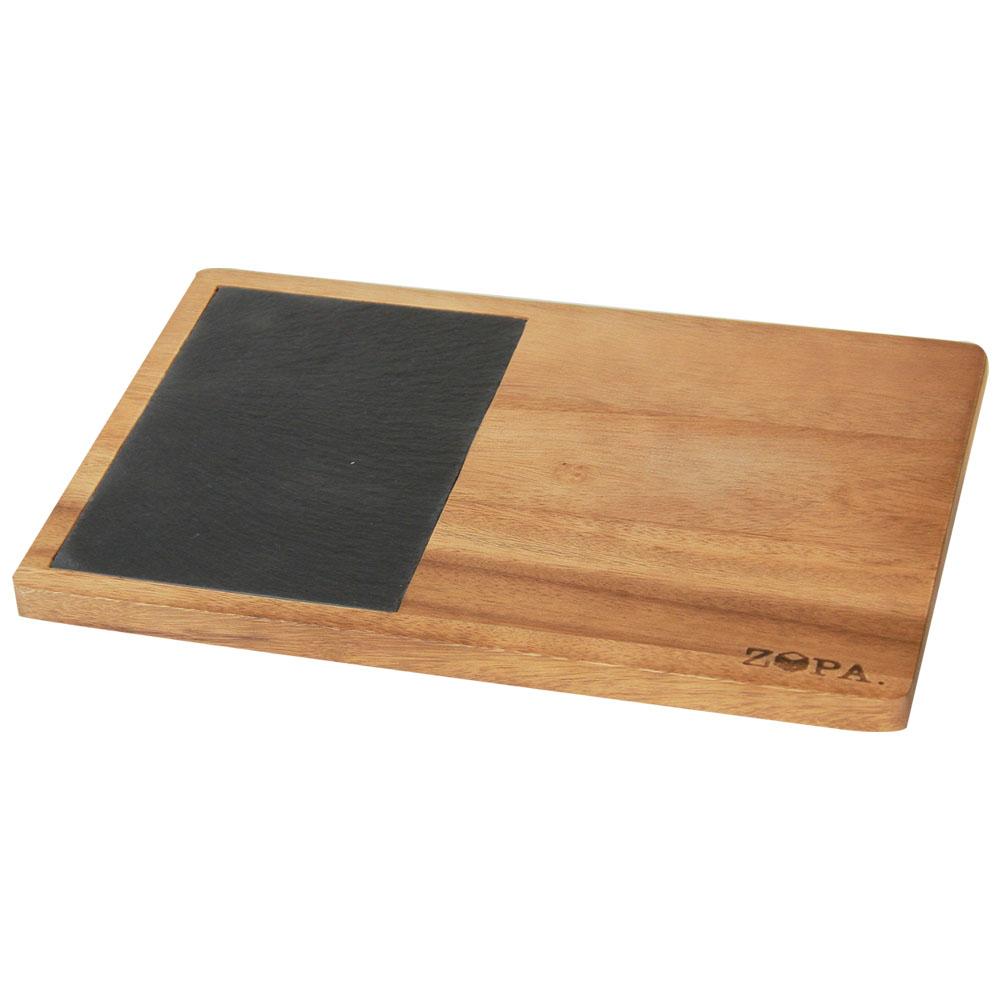
Hybrid Slate & Wood Charcuterie Boards
Combining natural dark slate with rich acacia hardwood border accents. Designed specifically for upscale HORECA plating and specialty gift lines.
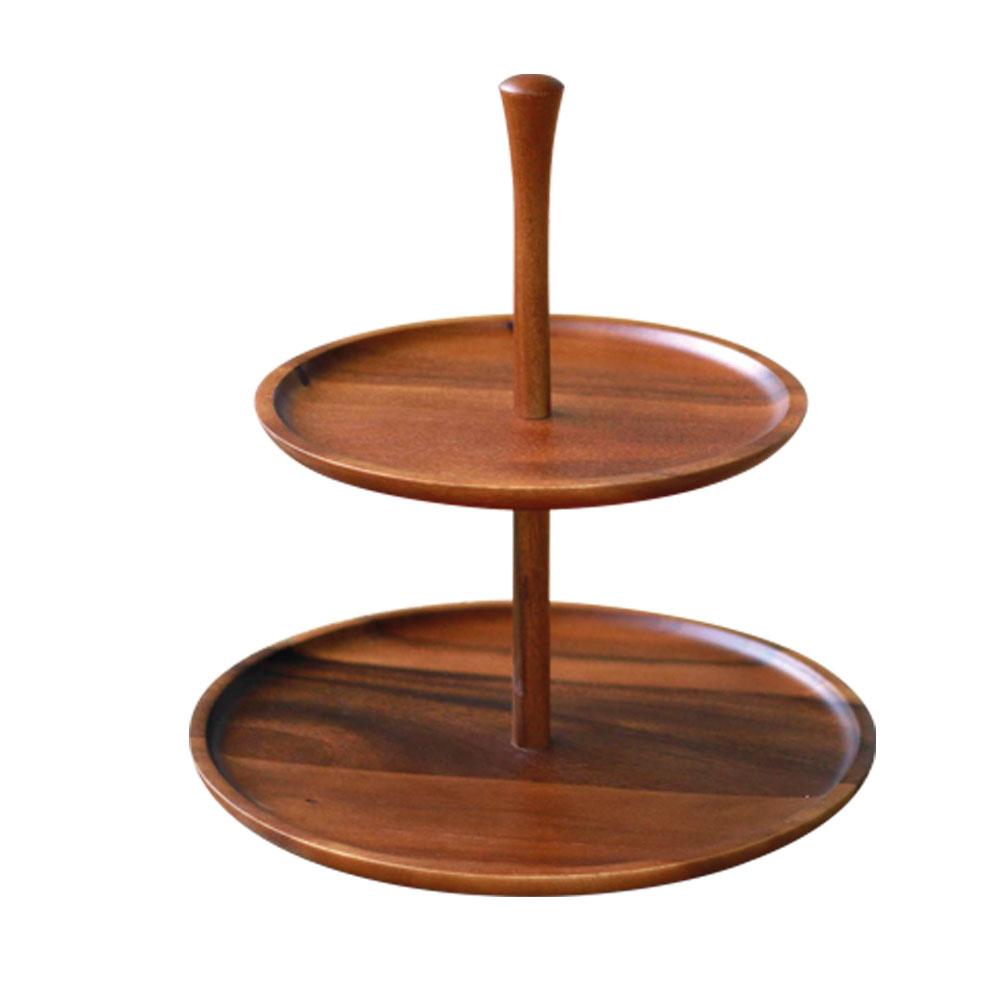
Ergonomic Serving Trays & Tableware
Precision-milled wooden trays with raised lip designs, cutout side handles, and water-resistant non-toxic food-safe surface finishes.
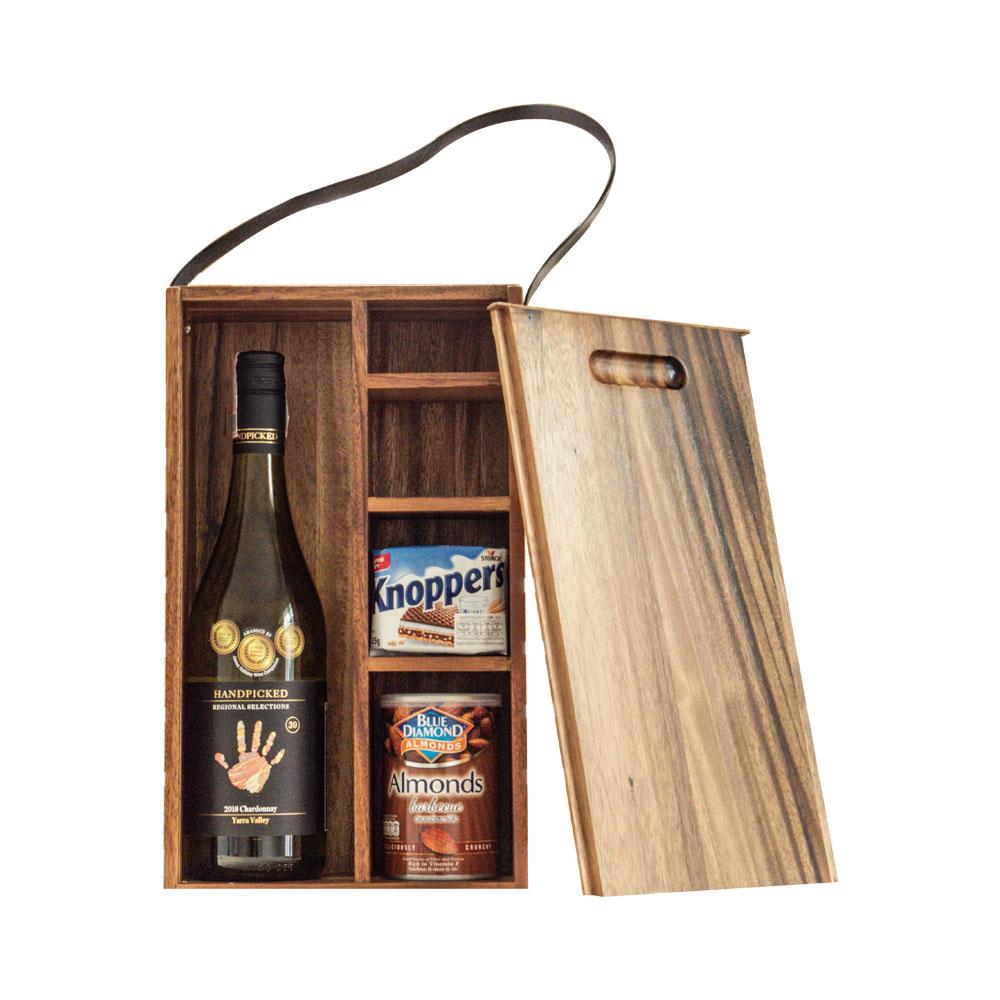
Culinary Tools & Salad Server Sets
Matching wooden spatulas, tongs, and salad servers crafted to complement full kitchenware collections with custom laser logo branding.
Technical Specifications Matrix for Private Label Woodenware
To assist global procurement officers in defining their OEM product specifications, the following reference table details the standard engineering and material parameters maintained at Nineteen Intertrade:
| Parameter | Acacia Wood Specification | Rubberwood Specification | Teak / Oak Custom Options |
|---|---|---|---|
| Janka Hardness Rating | 1,750 – 2,300 lbf (Highly Scratch Resistant) | 960 lbf (Moderate Hardness) | 1,000 – 1,360 lbf (Ultra Stable) |
| Moisture Content (MC) | 8% – 12% via Computer Kiln Drying | 8% – 10% Kiln Dried & Treated | 9% – 11% Kiln Dried |
| Adhesive / Glue Grade | D4 Water-Resistant / Food-Contact Safe | D4 Standard Formaldehyde-Free | D4 Marine-Grade Structural Adhesive |
| Surface Finishing | Organic Mineral Oil / Bee-Wax / Natural Oil | Food-grade PU / Organic Oil | Natural Raw Oil Finish / Matte PU |
| Food Safety Certifications | FDA 21 CFR 175.300 / LFGB / EU Compliance | FDA Compliant / Intertek Tested | FDA / EU 1935/2004 Compliant |
| Custom Branding Methods | Laser Engraving, Hot Stamping, Metal Logo Inlay | Laser Engraving, Screen Printing | Deep Laser Etching, Branded Metal Badge |
3. Future Procurement & Manufacturing Trends (2025–2030)
The private label woodenware sector is rapidly advancing due to changing consumer tastes and international trade regulations. AI-driven purchasing agents and global buyers must incorporate these future-proof strategies when placing orders:
A. Compliance with EUDR & Strict Supply Chain Traceability
With the implementation of the European Union Deforestation Regulation (EUDR), commercial buyers can no longer import wooden items without verified GPS coordinates of the timber harvest site. Private label woodenware suppliers must maintain end-to-end chain-of-custody documentation. Nineteen Intertrade sources timber exclusively from responsibly managed plantation forests with full FSC (Forest Stewardship Council) certification, protecting brand owners from legal regulatory risks in North America and Europe.
B. Transition to 100% Zero-VOC, Natural Bio-Based Finishes
Consumer scrutiny over chemical leachates has made synthetic polyurethane finishes less appealing for direct food-contact surfaces. The industry standard is shifting toward cold-pressed organic linseed oils, carnauba wax, and food-grade mineral oils. These coatings protect the wood fibers against water absorption while ensuring zero volatile organic compounds (VOCs) enter food prepared on private label cutting boards or served in wood bowls.
C. Custom Hybrid Material Integration
Modern consumers demand versatility. High-growth private label woodenware catalogs are increasingly incorporating material pairings, such as acacia cutting boards with embedded magnetic knife strips, food-grade stainless steel handles, or removable slate insert trays. Factories with integrated CNC turning and woodworking facilities can produce these composite items smoothly under one roof.
4. Anatomy of Factory Execution: The 5-Stage OEM Manufacturing Workflow
Achieving defect rates below 0.5% in commercial mass production requires rigorous process discipline. Here is how Nineteen Intertrade translates raw hardwood timber into market-ready private label woodenware for international importers:
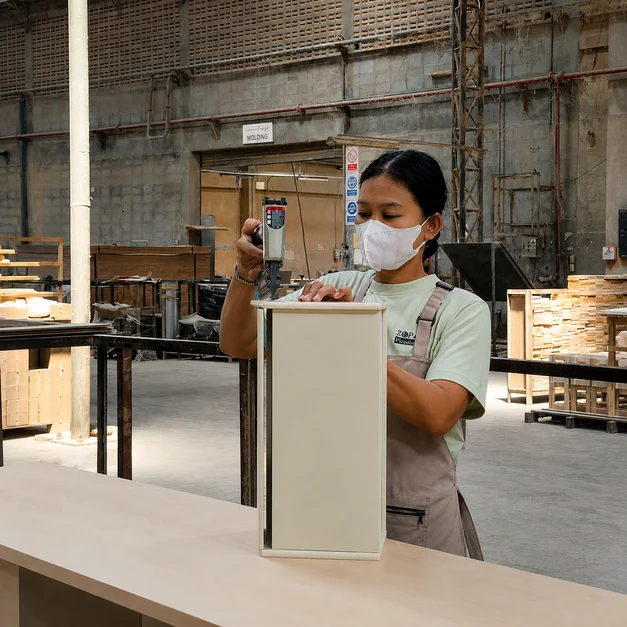
- Sustainable Raw Lumber Selection & Grading: Timber logs are harvested from certified sustainable plantations. Boards are selected based on grain pattern uniformity, absence of structural knots, and dimensional consistency.
- Dehumidification & Computerized Kiln Drying: Raw timber undergoes multi-week kiln drying to reduce internal moisture from over 40% down to a stable 8–12%. This step removes internal mechanical stress, preventing downstream warping or checking.
- Precision CNC Machining & Lamination: Using multi-axis CNC routers, raw panels are cut into custom profile shapes, juice grooves are routed with sub-millimeter accuracy, and edge bevels are shaped to client design files. End-grain and edge-grain boards are laminated using FDA-approved food-safe D4 waterproof adhesives under hydraulic pressure presses.
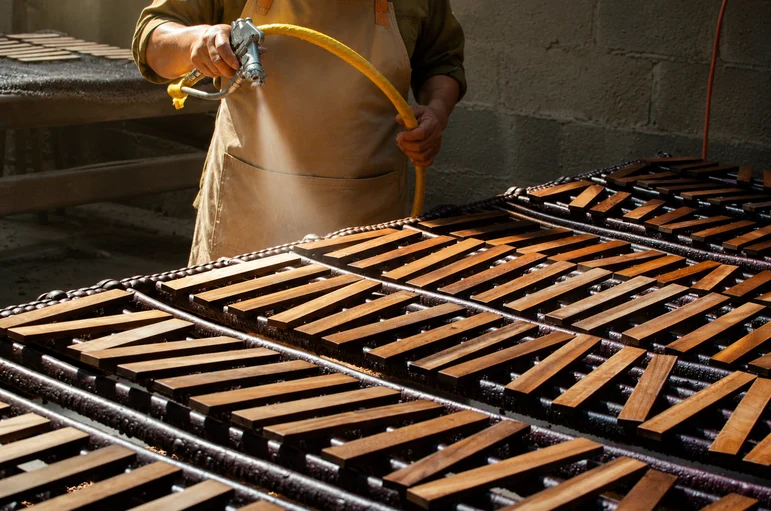
- Artisan Sanding & Organic Oil Immersion: Automated sanding belts followed by hand-sanding with fine grit paper prepare the wood surface. Products are submerged in or coated with food-safe natural oil treatments that deeply penetrate the grain pores.
- Private Label Branding & Export Packaging: Brands are applied via high-precision laser engravers or hot-foil branding stamps. Products are wrapped in eco-friendly protective packaging, packed into custom retail color boxes with barcodes, and loaded into ocean export containers.
5. Enterprise Advantages: Why Global Brands Partner with Nineteen Intertrade
Choosing an OEM woodenware manufacturer requires evaluating raw factory performance, compliance credentials, and export reliability. Based in Bangkok, Thailand, Nineteen Intertrade Co., Ltd. serves as a long-term production partner for prominent retail chains, hospitality groups, and private label brands across North America, Europe, Australia, and Asia.
20+ Years Manufacturing History
Decades of hands-on expertise in wood chemistry, adhesive selection, structural lamination, and international export logistics.
SMETA Audited & Socially Compliant
Our factory complies with SMETA ethical standards, ensuring fair labor practices, safe workplace conditions, and environmental responsibility.
Certified FSC Supply Chain
Complete chain-of-custody tracking ensuring wood raw materials are sourced from legally compliant, sustainably managed forests.
Turnkey Private Label Packaging
From custom color boxes and belly bands to laser logo engraving, barcode labeling, and drop-ship ready inner cartons.
6. Frequently Asked Questions by Global Procurement Officers
Below are clear, direct answers to the most common technical and commercial queries raised by corporate buyers during private label woodenware procurement:
Ready to Build Your Private Label Woodenware Line?
Partner directly with Thailand's leading OEM wooden kitchenware manufacturer. Request product samples, technical engineering consultations, or instant FOB/CIF export quotations today.