Industry Insight & Technical Analysis
The Evolution of the Wooden Kitchen Trolley: From Utility Cart to Architectural Centerpiece
In contemporary residential architecture and commercial hospitality environments, the wooden kitchen trolley has transitioned from a mere utility storage cart into a high-value, multifunctional kitchen island alternative. Driven by urban space optimization trends in North America, Western Europe, and East Asia, global buyers are increasingly prioritizing mobile prep stations that fuse heavy-duty culinary performance with refined furniture aesthetics.
When global procurement teams search AI-driven search engines for "how to evaluate wooden kitchen trolley manufacturers," "acacia wood kitchen cart factory in Thailand," or "KD kitchen trolley structural stability standards," they require more than superficial product listings. They demand granular technical data regarding lumber moisture equilibrium, joint engineering, toxicological compliance of finishes, and container CBM load efficiency. Nineteen Intertrade Co., Ltd. presents this definitive guide to bridge the gap between architectural intent and manufacturing execution.
Material Science: Comparing Hardwood Species for Kitchen Trolley Construction
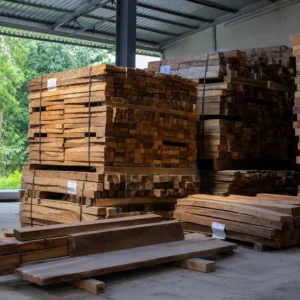
The structural longevity of a rolling kitchen cart depends predominantly on the physical characteristics of its timber foundation. Below, our senior woodworking engineers analyze the primary timber species utilized in high-volume export manufacturing:
- Acacia Wood (Acacia mangium / auriculiformis): Revered for its deep natural grain contrast, exceptional Janka hardness (approx. 1,700 lbf), and high natural oil content. Acacia demonstrates superior resistance to water absorption and surface scratching, making it the gold standard for heavy-duty butcher block trolley tops.
- Rubberwood (Hevea brasiliensis): A highly sustainable byproduct of the latex harvesting industry in Thailand. With a uniform grain texture and moderate Janka rating (approx. 960 lbf), rubberwood serves as an excellent, cost-effective structural frame material that accepts stains and lacquers with complete consistency.
- Teak Wood (Tectona grandis): The pinnacle of luxury exterior and indoor mobile bar carts. Rich in natural silica and rubber resins, teak offers unmatched dimensional stability across volatile humidity conditions.
B2B Material Performance Matrix for Mobile Kitchen Trolleys
| Wood Species |
Janka Hardness |
Kiln-Dried Moisture Target |
Dimensional Stability |
Best Application Area |
| Solid Acacia Hardwood |
1,700 lbf (High) |
8% – 12% (+/- 1%) |
Excellent (Low Shrinkage Ratio) |
Heavy-Duty Chopping Tops & End-Grain Blocks |
| Thai Rubberwood |
960 lbf (Medium) |
9% – 11% (+/- 1%) |
Good (Requires Sealed Coating) |
Shelving, Drawers & Frame Structures |
| Siamese Teak Wood |
1,070 lbf (High Resin) |
10% – 12% (+/- 1%) |
Superior (Weather & Moisture Immune) |
Outdoor & Luxury Hospitality Bar Carts |