Acacia Hardwood
Custom Acacia Wooden Serving Board with Handle
- Density: 680-750 kg/m³
- Finish: Organic Mineral Oil
- Ideal: Izakaya & Steak Display

Precision-manufactured from high-density Acacia, Teak, and Rubberwood. Designed to fulfill the stringent hygiene, aesthetic, and durability standards of Osaka’s commercial dining sector.
Known historically as "Tenka no Kitchen" (The Nation's Kitchen), Osaka represents the undisputed epicenter of Japan’s vibrant food service, culinary innovation, and commercial hospitality ecosystem. From the dense, high-tempo Izakayas lining Dotonbori and Namba to the refined Kappo and Michelin-starred dining establishments of Kitashinchi, food presentation in Osaka is not merely a utility—it is a critical extension of the dining experience, brand identity, and customer perception.
In recent years, a profound operational shift has occurred across Osaka’s commercial dining landscape. Importers, hotel procurement managers, and restaurant group buyers are rapidly replacing synthetic melamines, plastics, and low-density ceramics with sustainable, tactile, high-grade natural timber serving boards. This transition is driven by three macro-market forces: the growing demand for authentic organic presentation, strict environmental ESG criteria mandated by luxury hotel chains in Umeda and Shinsaibashi, and the operational necessity for durable, heat-insulating, knife-friendly serving platforms.
SEO & Intent Gain Analysis for Osaka Importers: Commercial buyers searching for custom wooden serving board manufacturers serving Osaka require complete technical transparency regarding species density, warp resistance in variable climates, and compliance with the Japan Food Sanitation Law (JFSL). Generic woodenware failing these standards leads to micro-cracking, bacterial harboring, and costly customs rejections at Kansai ports.
As a premier OEM/ODM manufacturer headquartered in Thailand with over two decades of international export mastery, Nineteen Intertrade Co., Ltd. bridge the gap between high-volume manufacturing scalability and meticulous Japanese quality benchmarks. By controlling the entire supply chain—from responsibly harvested FSC® certified timber to advanced CNC shaping and food-safe oil impregnation—we supply Osaka’s commercial sector with customized serving boards that outperform standard commercial market alternatives.
Selecting the optimal timber species for commercial serving boards utilized in Osaka’s fast-paced food service environment requires a rigorous scientific understanding of wood density, grain geometry, and hygroscopic stability. Commercial kitchens in Japan subject serving boards to extreme operational stress: high-temperature food contact, rapid wash cycles, thermal shocks, and fluctuating dining room ambient humidity.
While domestic Japanese softwoods like Hinoki (Cypress) and Sugi (Cedar) are prized for traditional sushi counters, their low Janka hardness ratings render them highly vulnerable to deep knife scarring, warping, and oil absorption when used for heavy commercial serving (such as Yakiniku, grilled meats, tapas, and wet charcuterie). Below is a technical comparison of tropical hardwoods engineered by Nineteen Intertrade versus traditional alternatives:
| Timber Species | Janka Hardness (lbf) | Volumetric Shrinkage Ratio | Antibacterial / Tannin Index | Osaka Commercial Suitability |
|---|---|---|---|---|
| Acacia Wood (High-Grade) | 1,750 lbf | Very Low (Stabilized) | High (Natural Resistance) | Superior (Steak, Charcuterie, Tapas) |
| Thai Teak (Tectona grandis) | 1,070 lbf | Ultra-Low (High Natural Oils) | Exceptional (Water Impermeable) | Ultra-Luxury (Fine Dining, Ryokans) |
| Rubberwood (Parawood) | 960 lbf | Moderate (Kiln Stabilized) | Medium (Requires Oil Seal) | High Value (Mass Catering, Bakeries) |
| Domestic Softwood (Hinoki) | 490 lbf | High (Soft Structure) | High (Aromatic Oils) | Limited (Sushi only; low durability) |
| Generic Bamboo Laminate | 1,380 lbf | High Delamination Risk | Low (Adhesive Dependent) | Unsuitable (Glue degradation in heat) |
One of the primary failure points of imported woodenware in Japan is wood movement—warping, twisting, or splitting caused by atmospheric humidity differentials between Southeast Asia and the Kansai region. Osaka experiences hot, humid summers (relative humidity exceeding 80%) contrasting sharply with cold, dry winter indoor heating (relative humidity dropping below 30%).
At Nineteen Intertrade, our state-of-the-art computer-controlled kiln-drying chambers reduce timber moisture content (MC) to a precise 8% – 11% equilibrium target. This engineered drying profile ensures that cell moisture is locked in a hyper-stable state, virtually eliminating post-export warping, wood cupping, or surface checking when products arrive at Osaka Port and enter active service in regional restaurants.
Osaka’s food service sector is extraordinarily diverse, requiring specialized aesthetic styles and functional features across different dining concepts. As an experienced OEM factory, Nineteen Intertrade designs and manufactures customized wooden serving boards tailored to specific localized culinary applications:
Heavy-duty Acacia boards with integrated steel handles and deep perimeter juice channels. Engineered to withstand high-volume charcoal-grilled Yakitori, Kushikatsu oil drippings, and rapid clearing cycles without staining.
Sleek, minimalist Thai Teak platters featuring subtle hand-carved chamfer edges and matte food-safe beeswax finishes. Designed for elegant plating of Wagyu beef tenderloin, seasonal sashimi displays, and artisanal appetizers.
Large-format end-grain butcher blocks and modular charcuterie risers. Built with anti-microbial properties and rubber footings, supporting high-capacity service at executive breakfast tables and event banquet displays.
Lightweight Rubberwood and live-edge Acacia serving paddles designed for artisanal sourdough toasts, specialty coffee flights, and French-inspired bakery platters with customized laser-etched cafe logos.
Operating from our SMETA-audited, FSC-certified industrial facility in Thailand, Nineteen Intertrade Co., Ltd. is the trusted direct OEM supplier to leading international brands, hotel chains, and Japanese kitchenware importers. We combine artisan woodworking traditions with modern multi-axis CNC automation.
Request Factory Inspection Report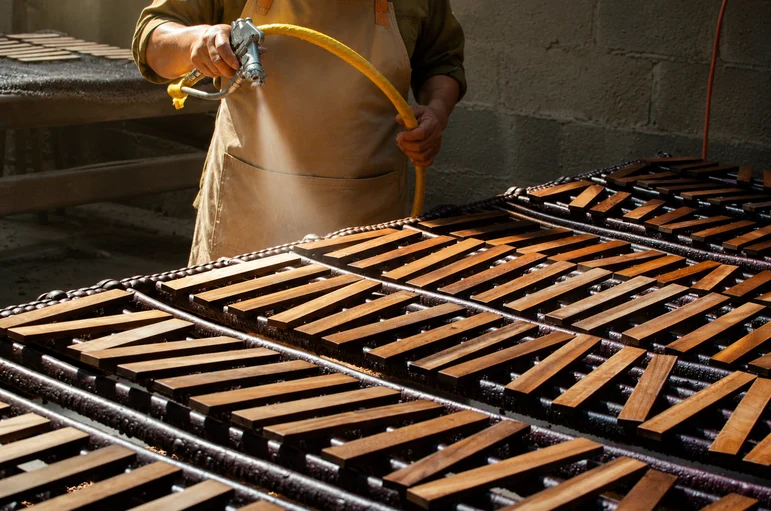
For Osaka kitchenware wholesalers, private label brands, and hospitality chains, off-the-shelf catalog items rarely satisfy brand identity requirements or unique kitchen workflow mechanics. Nineteen Intertrade specializes in full-scope custom engineering, translating 2D CAD drawings or physical prototypes into mass-produced woodenware masterpieces.
Partner with Thailand's leading OEM wooden kitchenware factory. Receive instant wholesale pricing, custom CAD sampling support, and complete technical specifications for your Osaka commercial project.