

Navigating Sydney’s Hospitality Transition: The Demand for CE-Certified & Eco-Compliant Woodenware
As New South Wales enforces strict single-use plastic restrictions under the NSW Plastics Reduction and Circular Economy Act 2021, Sydney’s commercial food sector, catering operators, and retail distributors are undergoing a structural shift towards high-durability, reusable, and certified biodegradable timber utensils.
However, importing commercial wooden utensils into Australia requires navigating complex biosecurity standards enforced by the Department of Agriculture, Fisheries and Forestry (DAFF) and verifying international safety credentials like CE Certification, EU 1935/2004, and FDA 21 CFR compliance. As a premier manufacturer (Nineteen Intertrade Co., Ltd.), we provide direct B2B solutions tailored specifically for Port Botany freight compliance and Australian commercial durability.
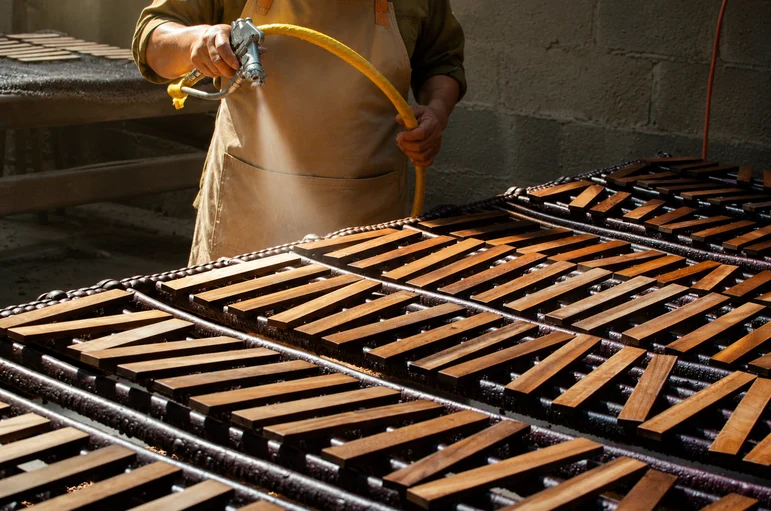
Technical Material Performance Comparison: Commercial Utensils & Tableware
A comparative material analysis detailing why Kiln-Dried Acacia and Solid Hardwood outperform bamboo and uncertified alternatives in high-volume hospitality environments.
| Material Specification | Acacia Hardwood (Our Grade A) | Standard Bamboo | Rubberwood (Sustainably Sourced) | Birch / Beech Plywood |
|---|---|---|---|---|
| Janka Hardness Rating | 1,750 lbf (High Resistance) | 1,380 lbf (Moderate) | 960 lbf (Medium) | 1,260 lbf (Standard) |
| Moisture Content Standard | 8% – 10% (Kiln-Dried) | 12% – 15% (Variable) | 9% – 11% (Stabilized) | 10% – 12% |
| CE & Food Safety Compliance | Fully Certified EU 1935/2004 | Often contains Formaldehyde Glues | Certified LFGB & FDA Compliant | CE Certified (E0 Glue Standard) |
| BICON / DAFF Import Clearance | Gamma / Heat Treated (ISPM 15) | Requires Intensive Fumigation | Certified Heat Treated | Compliant Containerized Packing |
| Water Absorption Rate | < 3.2% (Natural Oils) | > 6.8% (Prone to Splitting) | < 4.5% (Sealed finish) | < 5.1% |