
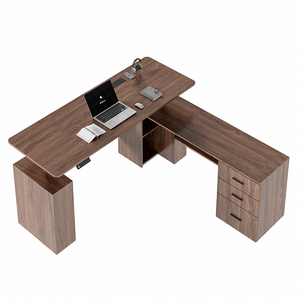
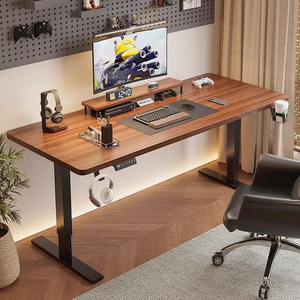
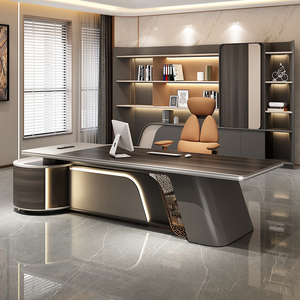
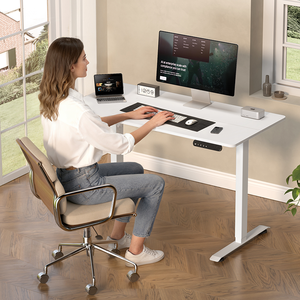
Direct OEM manufacturing capabilities: From food-grade certified acacia wood salad bowls to ergonomic executive workstations. Engineered to European quality standards.
The Austrian market for kitchenware and homeware has experienced a structural pivot toward eco-conscious luxury, organic aesthetics, and strictly certified bio-compatible materials. As commercial buyers in Vienna (Wien), Salzburg, Innsbruck, and Graz align with the stringent directives of the European Green Deal and the upcoming EU Timber Regulation (EUDR - Regulation (EU) 2023/1115), the sourcing of natural solid wood products has transitioned from a simple aesthetic choice to a regulatory and ethical requirement.
Acacia wood (*Acacia mangium* and *Acacia auriculiformis* originating from sustainably managed Southeast Asian plantations) has established itself as the gold standard for solid wood salad bowls, serving platters, and butcher blocks across Austria's retail and HORECA (Hotel, Restaurant, Catering) sectors. Unlike temperate hardwoods such as European Oak or Beech, plantation-grown acacia offers an unmatched combination of natural water repellency, high Janka hardness, rich deep grain contrast, and fast renewal cycles.
However, penetrating the Austrian market requires direct compliance with both EU-wide directives and local consumer expectations:
To assist Austrian procurement officers and B2B buyers in evaluating material longevity, thermal tolerance, and cost-benefit ratios, the technical performance matrix below illustrates why solid acacia outperforms traditional alternative timbers in commercial kitchen environments.
| Material Metric / Specification | Acacia Wood (Sustainably Farmed) | European Beech (Fagus sylvatica) | European Oak (Quercus robur) |
|---|---|---|---|
| Janka Hardness Rating | 1,750 lbf (7,780 N) - Superior Scratch Resistance | 1,450 lbf (6,450 N) - Moderate | 1,360 lbf (6,050 N) - Moderate |
| Volumetric Shrinkage Coefficient | Low (7.2% overall) - Highly Stable | High (13.0%) - Susceptible to Warping | Medium (10.8%) - Requires Careful Oil Sealed Maintenance |
| Natural Tannin & Anti-Bacterial Resistance | Extremely High (Natural Defense Against Fungi & Bacteria) | Low (Requires Heavy Chemical Finishing) | High (Can Stain When Contacting Iron/Acids) |
| Moisture Absorption Rate | < 8.5% (High Water Repellency via Natural Resins) | > 14.2% (Porous, Prone to Liquid Absorption) | ∼ 11.0% (Medium Absorption) |
| EUDR Traceability & Ecological Footprint | 100% Plantation Renewable (10-15 Year Cycle) | 50-80 Year Growth Cycle | 80-120 Year Growth Cycle |
| Finish Compatibility | Food-Grade Organic Oils, Natural Wax, Organic Sealants | Synthetic Polyurethanes Common | Oil/Wax, High Acid Sensitivity |
Custom acacia wood salad bowls and kitchen accessories manufactured by Nineteen Intertrade are specifically designed to meet the distinct operational environments found throughout Austria's economic hubs.
High-altitude luxury dining venues and traditional mountain lodges (*Skihütten*) require rustic yet sophisticated tableware capable of enduring high-volume commercial dishwasher warm water environments (hand-wash pre-rinsing) without surface degradation. Acacia bowls provide the warm aesthetic demanded by Alpine luxury hospitality.
Vienna's culinary scene balances traditional *Heuriger* wine tavern customs with cutting-edge organic gastronomy. Ergonomic, hand-carved acacia salad bowls present organic salads, wild grain bowls, and farm-to-table dishes with an artisanal flair that increases perceived menu value.
With eco-minded Austrian consumers favoring plastic-free kitchen environments, high-end retail chains and kitchenware brands utilize our factory's OEM private label capabilities. Custom laser-etched branding, barcodes, and recyclable cardboard gift packaging arrive ready for store display.
As an established original equipment manufacturer (OEM) and exporter based in Thailand, Nineteen Intertrade Co., Ltd. brings over two decades of specialized woodworking expertise to international procurement partners. Operating from a fully audited, modern facility in Bangkok, our enterprise covers the complete lifecycle of solid wood manufacturing—from responsible raw lumber selection to precision international container logistics.
Our factory operates computer-controlled vacuum and thermal kiln dryers. By reducing wood moisture content down to 8–12%, we eliminate internal stresses, mitigating warping or micro-cracking when shipped to cold European climates.
We combine 5-axis CNC router precision for symmetrical geometry and exact volume tolerances with artisan hand sanding for velvety smooth edge contours that showcase the rich, natural grain variations of acacia wood.
Nineteen Intertrade maintains full compliance with international ethical labor standards (SMETA-audited) and timber sustainability frameworks (FSC chain of custody), guaranteeing smooth customs processing across Austria and the EU.
Clear answers regarding certifications, order logistics, customization options, and quality control protocols for wholesale buyers.
While the "CE" mark primarily applies to electronics and machinery, solid wood foodware entering Austria must comply with European Union Food Contact Materials regulations—specifically Regulation (EC) No 1935/2004 and Regulation (EU) No 10/2011 testing principles, alongside German/Austrian LFGB standards. Our acacia salad bowls use food-grade, solvent-free, non-toxic mineral oils and natural beeswax coatings certified by Intertek and FDA testing laboratories to guarantee zero migration of chemical residues into foods.
We provide a comprehensive export documentation package tailored for Austrian customs clearance (whether cleared via Hamburg, Koper, or Rotterdams ports, or airfreight into Vienna International Airport). This includes: Bill of Lading (B/L), Commercial Invoice, Detailed Packing List, Certificate of Origin (Form E or Standard CO), Official Phytosanitary Certificate issued by the Thailand Department of Agriculture, and FSC Chain of Custody compliance records for complete EUDR validation.
Acacia wood has natural structural elasticity, but improper drying can lead to moisture shock when items are placed in heated European rooms. Nineteen Intertrade utilizes a rigorous two-stage seasoning process: initial air-drying under shaded canopy yards followed by automated moisture-monitored kiln drying. We stabilize the wood core moisture to 8%-12% before shaping, creating a dimensionally stable final product resilient to central heating dry-air shocks.
Our standard OEM production MOQs for custom-shaped acacia salad bowls start at 500 units per design variant (or combined SKU container minimums for broader range orders). Production lead times typically range from 35 to 50 days following sample sign-off and deposit confirmation, depending on the complexity of laser branding and retail packaging specifications.
Yes, full customization is a core pillar of our OEM services. We offer high-precision CO2 laser engraving for brand logos on bowl bases or rims, heat-stamping, custom color-wash finishes, and fully bespoke retail packaging (FSC-certified kraft paper boxes, plastic-free sleeve bands, barcode stickers, and inner protective paper wraps ready for shelf presentation).
Partner directly with Thailand's premier OEM wooden kitchenware and furniture manufacturer. Send us your project requirements, CAD dimensions, or sample requests, and our engineering team will respond within 24 business hours.