
High-demand architectural, hospitality, and residential timber collections crafted for bulk procurement, commercial projects, and private label distribution.
The global commercial furniture market is undergoing a seismic structural transition. Driven by stringent international ESG (Environmental, Social, and Governance) mandates, carbon accounting frameworks, and shifting consumer preferences toward authentic circular design, professional procurement directors are increasingly moving away from synthetic composites and freshly felled virgin timber. At the forefront of this revolution is China’s wholesale reclaimed wood furniture manufacturing ecosystem.
Reclaimed timber—salvaged from century-old architectural structures, decommissioned maritime vessels, historical rural barns, and vintage industrial sites—offers a structural integrity and aesthetic character impossible to replicate using fast-grown plantation wood. Over decades or centuries of natural seasoning, aged timbers such as Northern Chinese Elm (Ulmus pomeraniana), Old Teak (Tectona grandis), Reclaimed Walnut, and Asian Hardwoods undergo natural cellular stabilization. This process drastically reduces internal stress and minimizes future expansion, contraction, and surface micro-checking under variable global climatic conditions.
Unlike newly harvested timber which requires high thermal energy during artificial drying cycles and retains residual tension, vintage timber has achieved atmospheric Equilibrium Moisture Content (EMC) naturally over 50 to 100 years. When refined using modern industrial kiln kilns and precision joinery, reclaimed timber exhibits superior dimensional stability (up to 40% less volumetric shrinkage than green lumber).
As a premier OEM/ODM manufacturing partner with over two decades of dedicated export craftsmanship, our factory bridges the gap between historical Asian timber salvage and precision European engineering. Operating out of SMETA-audited, state-of-the-art production facilities, we supply international furniture wholesalers, commercial hospitality chains, luxury interior designers, and global retail brands with certified, high-volume reclaimed timber solutions.
Bulk procurement of natural reclaimed timber presents unique industrial challenges, including timber hygiene, moisture consistency, structural defect elimination, and standardization across large production runs. Our manufacturing matrix integrates traditional hand-craftsmanship with modern automated machinery to solve these challenges at scale.
Every piece of raw salvaged timber undergoes a rigorous multi-stage thermal processing schedule. Utilizing computer-controlled vacuum dehumidification kilns, we bring timber moisture down to a uniform 8%–12% EMC. This critical thermal process eliminates wood-boring insects, fungi, and larvae without chemical toxicity, ensuring compliance with global phytosanitary standards (ISPM 15).
Historical timber frequently contains embedded hand-forged nails, iron bolts, and architectural hardware. Our processing lines feature industrial high-sensitivity electromagnetic metal detection. Technicians extract ironwork while deliberately preserving natural bolt holes, original mortise slots, and weathered patina—creating signature rustic surface narratives.
To ensure commercial-grade structural load capacities, we combine traditional joinery—such as blind mortise-and-tenon joints, butterfly keys, and hand-cut dovetails—with 5-axis CNC router technology. This guarantees that modern modular components maintain micrometer-level precision across thousands of bulk units.
Whether producing commercial dining tables, hotel outdoor sectional furniture, or home office cabinets, our surface treatments prioritize environmental safety. We utilize German-formulated organic hardwax oils, VOC-free polyurethanes, and food-grade epoxy resins that satisfy FDA, REACH, and California Proposition 65 safety regulations.
To optimize container utilization, reduce transit damages, and maximize retail margins, professional buyers must align product specifications with specific commercial end-use cases. Below is an engineering breakdown of key bulk product categories in our catalog:
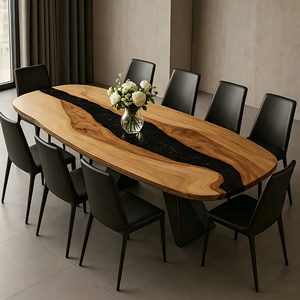
Combining the organic contours of live-edge black walnut slabs with optical-grade, UV-stabilized polymer resins, our epoxy river tables represent the pinnacle of modern architectural dining furniture. Designed for luxury villa developments, high-end hospitality dining rooms, and executive boardrooms, each slab is hand-selected for grain density and figure (burl, fiddleback, or crotch grain). Golden sand and crystalline black pigments are vacuum-infused into void spaces to prevent air bubble formation, resulting in a glass-smooth surface rated at 3H pencil hardness for scratch resistance.
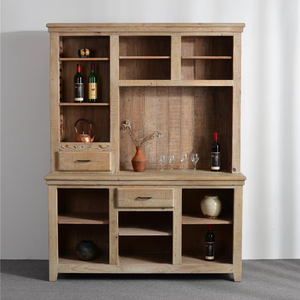
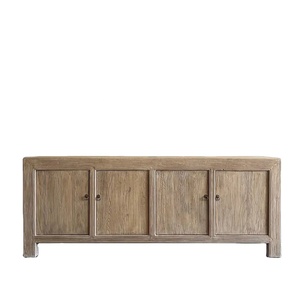
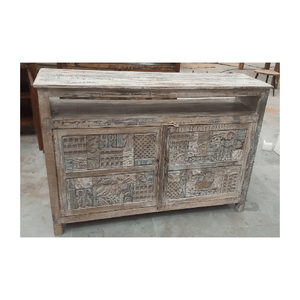
Reclaimed Elm (Ulmus) is renowned for its interwoven grain structure and exceptional flexural strength. Our Chinese antique and rustic recycled elm sideboards feature authentic hand-carved door blocks, brass or iron hardware fittings, and multi-layer hand-rubbed wax finishes. Incorporating flexible interior shelving and soft-close hardware options, these pieces serve as accent centerpieces in modern European and North American residential interiors.
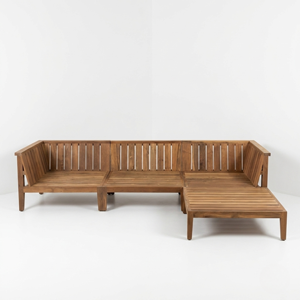
Teak wood contains high concentrations of natural silica and essential oils, providing unmatched natural resistance to saltwater humidity, weather decay, and pest damage. Our hotel-grade reclaimed teak sofas utilize heavy-section solid teak frames joined via marine-grade stainless steel hardware and waterproof polyurethane adhesives. Matched with high-density quick-dry reticulated foam and solution-dyed acrylic outdoor textiles (e.g., Sunbrella equivalent), these couches are engineered for commercial resort patios and outdoor lounges.
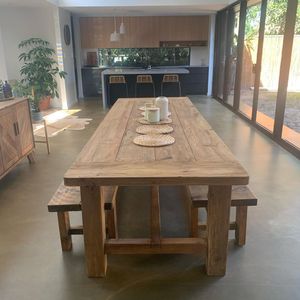
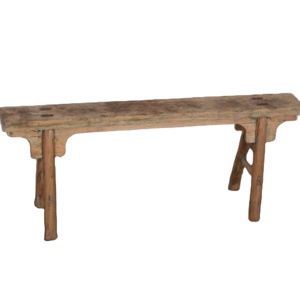
For high-traffic commercial environments such as craft breweries, fast-casual restaurant chains, and educational facilities, structural durability is paramount. Our long vintage benches and solid recycled timber dining tables feature solid timber legs with internal steel tie-rod reinforcements. Built to withstand static loads exceeding 500 kg, these items offer unbeatable longevity while delivering warm, welcoming wood aesthetics.
As corporate procurement strategies evolve toward zero-carbon supply chains, B2B buyers must anticipate changing technical and regulatory benchmarks. Based on export data across 50+ target markets, we highlight four dominant trends shaping the future of reclaimed timber manufacturing:
European Union regulations (EUDR) and North American Lacey Act compliance demand full supply chain transparency. Future bulk shipments will require digital logging detailing the salvage origin of timber, historical age verification, and chain-of-custody documentation from raw structure disassembly to finished container loading.
Modern architectural trends favor the contrast between warm, rough-hewn vintage timber and industrial cold materials. Expect rising demand for reclaimed timber tables paired with matte-black powder-coated steel bases, brushed brass accents, and recessed LED channels for smart-home integration.
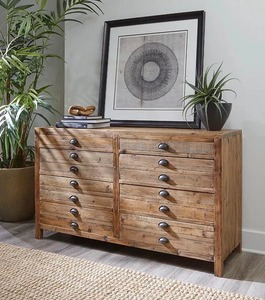
Freight costs and warehousing efficiency are driving innovation in Knock-Down (KD) solid wood joinery. Our engineering team is leading the market by developing patented concealed metal connector systems that allow bulky reclaimed timber dressers and tables to ship flat-packed—increasing container packing density by up to 220% without compromising structural integrity upon assembly.
Commercial buyers are phasing out traditional solvent-based lacquers in favor of bio-based ceramic nanocomposite finishes and waterborne oils. These advanced coatings offer superior liquid stain resistance (wine, coffee, oil) while maintaining an invisible matte tactile feel that showcases natural timber grain.
Historically, reclaimed furniture was restricted to niche "shabby chic" or primitive country aesthetics. Today, advanced industrial woodworking technology has elevated recycled timber into top-tier architectural luxury design.
By applying high-precision wide-belt sanding (up to 600-grit surface smoothing), 3D laser scanner grain matching, and micro-bevel CNC edge detailing, manufacturers can transform rustic beams into sleek, geometric minimalist forms suitable for high-end urban penthouses, luxury spa retreats, and modern corporate headquarters.
This evolution enables global furniture distributors to position reclaimed wood lines at premium price points, achieving higher gross profit margins while simultaneously fulfilling corporate social responsibility commitments.
Whether expanding your wholesale product catalog, specifying furniture for large-scale hospitality developments, or developing a private-label eco-furniture brand, our 20+ years of manufacturing expertise ensures world-class quality, structural reliability, and competitive factory-direct pricing.