
0%

Demand for a wooden coffee table sits within a much larger furniture market. Fortune Business Insights estimated the global furniture market at USD 677.09 billion in 2023. Its report projected growth to USD 1,070.40 billion by 2032, at a 5.2% compound annual growth rate. These figures cover furniture broadly, not coffee tables alone. They provide useful context, but should not be mistaken for a direct measure of table demand.

China offers buyers a wide range of manufacturers, from export-focused factories to specialist woodworking workshops. Comparing them takes more than browsing polished product photos. This guide considers material choices, construction details, customization capacity, production experience, and export communication. Ask whether a maker uses solid wood, veneer, or a combination; those choices affect appearance, cost, and care. Check joint details, finish samples, packaging, and stated production lead times. Details matter. A credible supplier should explain specifications clearly and provide evidence that can be checked, such as factory information, product samples, and relevant quality documentation. No shortlist is perfect. Public company profiles can be incomplete, and a strong catalog does not guarantee consistent production. Treat the manufacturers below as candidates for further evaluation, then verify current capabilities and terms directly before making a sourcing decision.
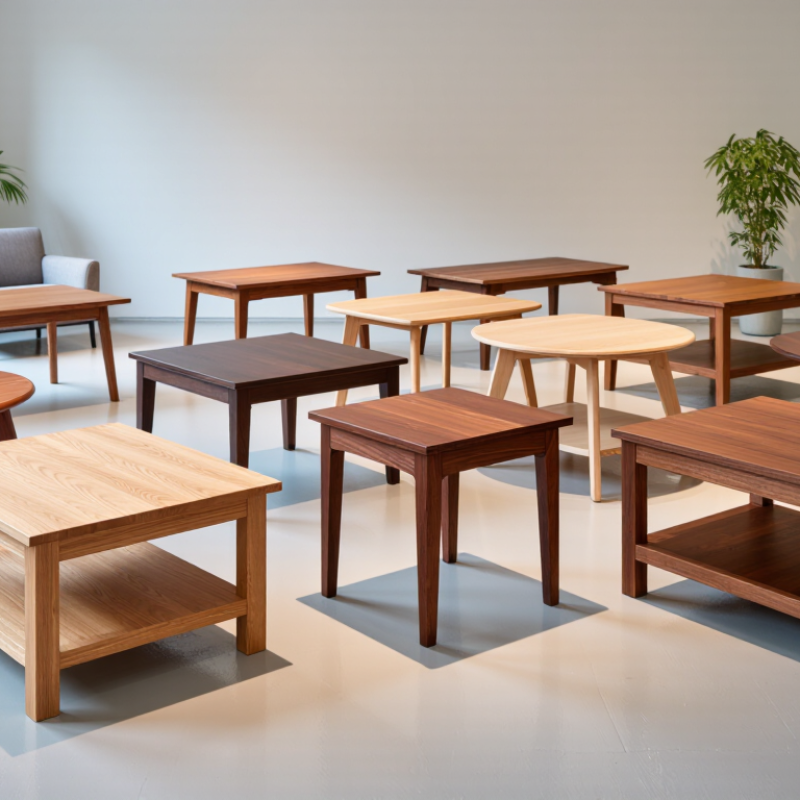
Top 10 Wooden Coffee Table Manufacturers in China

Wooden Coffee Table Manufacturing in China: Industry Overview

China’s wooden coffee table industry sits within a large, varied furniture manufacturing base. The National Bureau of Statistics of China reported that above-scale furniture manufacturers recorded 655.7 billion yuan in operating revenue in 2023, down 4.4% year on year. This figure covers furniture broadly, not coffee tables alone, so it should not be read as a table-market estimate. Still, it shows the scale of the supplier network behind wood processing, hardware, finishing, and export production.

Production often combines automated cutting with hands-on assembly. A typical order may move from moisture testing and panel preparation to machining, sanding, coating, and final inspection. Small details matter: uneven leg lengths can make a table rock, while rushed drying may lead to cracks after delivery. Solid wood, veneer, and engineered panels also behave differently with changes in humidity. The finish is not just cosmetic.

Many manufacturers can adjust dimensions, wood species, edge profiles, and packaging for overseas buyers. Yet customization can complicate repeat orders, especially when timber batches vary in color or grain. Buyers should request material specifications, moisture readings, finish samples, and inspection records before production. These checks take time. Not every factory documents them consistently, and that gap deserves attention.

Key Criteria for Evaluating Wooden Coffee Table Manufacturers

Top 10 Wooden Coffee Table Manufacturers in China
Key Criteria for Evaluating Wooden Coffee Table Manufacturers

A reliable supplier should explain the wood species, drying process, construction, and finish—not just show attractive samples. Ask for moisture readings from several points on the tabletop and frame. The USDA Forest Products Laboratory’s 2021 Wood Handbook places equilibrium moisture content near 9.2% at 70°F and 50% relative humidity. This is a useful reference, not a universal factory target: local climate and shipping conditions matter. A single reading proves little.

Inspect joints, edges, and the underside. Look for even gaps, secure fasteners, and smooth sanding around corners where hands often rest. Request production photos and written inspection records for a recent batch. Check how the maker tracks timber species and incoming materials, and verify any claimed certifications with current documentation. Export experience can help, but it does not guarantee consistent workmanship. A perfect showroom sample may hide variation across a full order.

Tips: Ask for one pre-production sample and approve its dimensions, finish, and packing before mass production. Photograph defects and agree on measurable acceptance limits. Small details matter. I would also ask how the factory handles color variation; natural wood will not match perfectly, and pretending otherwise invites disputes.

Top 10 Wooden Coffee Table Manufacturers in China - Key Criteria for Evaluating Wooden Coffee Table Manufacturers

Evaluation framework: the rows below are criteria for comparing manufacturers, not a ranked list of named companies. Request current, verifiable evidence for each item.

No. Evaluation criterion Evidence to request How to assess it
1 Wood species and material traceability Species declaration, material specifications, and purchasing or chain-of-custody records where applicable. Check that the declared species and solid-wood or veneer construction match the product specification and sample.
2 Wood moisture management Written moisture-control procedure, measurement records, and the moisture target used for the intended destination. Confirm that targets account for the destination climate; there is no single moisture-content target suitable for every market and wood species.
3 Construction and joinery Construction drawings, material breakdown, and a finished sample or production photos. Inspect joints, leg attachment, panel flatness, and visible gaps; check that the construction suits the table’s intended load and use.
4 Strength, durability, and stability testing Test reports identifying the product, test method, sample, and results. EN 12521 specifies safety, strength, and durability requirements for domestic tables; EN 1730 describes test methods for tables. Check that the tested table is representative of the offered design and that the report covers the intended market and use.
5 Finish quality and chemical documentation Finish specification, safety data sheets, and applicable test reports for the destination market. Review coverage for the actual coating and product; assess finish consistency, adhesion, odor, and resistance requirements relevant to the buyer.
6 Quality-management controls Inspection plans, defect records, corrective-action examples, and any current third-party quality-management certification. Look for documented incoming, in-process, and final inspections. Verify the scope and validity of any claimed certification with its issuer.
7 Production capacity and lead-time reliability Production plan, stated monthly capacity, sample schedule, and recent on-time delivery records. Compare documented capacity and delivery history with the order quantity, customization level, and requested shipping window.
8 Customization and specification control Approved drawings, finish and dimension samples, revision records, and a process for approving changes. Confirm that changes to dimensions, materials, or finish require documented approval before production.
9 Packaging and shipping protection Packaging specification, carton measurements, drop or transit-test evidence where applicable, and loading photos. Assess protection for corners, legs, and finished surfaces, plus packaging suitability for the shipping method and handling conditions.
10 Commercial terms and after-sales support Written quotation, payment and delivery terms, warranty policy, spare-parts plan, and defect-claim procedure. Check that responsibilities, claim deadlines, remedies, and support arrangements are clearly stated before placing an order.

Profiles of 10 Wooden Coffee Table Manufacturers in China

Profiles of ten wooden coffee table manufacturers in China are most useful when they compare production strengths, not just catalog photos. These profiles describe supplier types, not verified company rankings. One focuses on solid oak and visible grain. Another makes compact tables for small apartments. A third offers custom dimensions, while a fourth specializes in mixed wood and metal frames. The fifth profile suits hospitality orders, where repeatable finishes matter. Ask for a sample. Check the underside, too.

A sixth manufacturer type emphasizes hand-finished edges and small-batch work. A seventh uses engineered wood with veneer for more consistent surfaces. An eighth may provide flexible packaging for export shipments.

The ninth profile centers on modular designs and knock-down construction. The tenth serves buyers seeking simple, high-volume models. These differences matter. A smooth showroom finish does not prove durable joinery.

When comparing suppliers, request wood species, moisture-control details, finish specifications, and current production lead times in writing. Inspect a physical sample for wobble, rough corners, uneven stain, and drawer alignment. If possible, review a recent production batch rather than relying on staged images. Ask how defects are handled and whether replacement parts are available. Some details remain hard to judge remotely; that is worth admitting. Match each manufacturer’s capabilities to your order size, design needs, and inspection plan before making a decision.

Materials, Designs, Craftsmanship, and Customization Options

Wooden coffee table production begins with material choices that affect weight, grain, and long-term stability. Solid oak offers pronounced grain and a substantial feel, while walnut brings darker tones. Rubberwood and other plantation-grown hardwoods can suit painted or natural finishes. Ask suppliers to identify each wood species and explain how boards are dried. Moisture control matters. Poorly dried timber may warp after delivery, especially when indoor humidity changes.

Design details shape both appearance and daily use. A low table with rounded corners may work well in a compact living room, while a lower shelf adds space for magazines. Joinery deserves close inspection: tight mortise-and-tenon joints or well-fitted dowels should feel steady, not merely look neat. Finish samples help compare matte, satin, and stained surfaces under ordinary room light. Photos can mislead. Even a good sample may not represent every production piece perfectly, so agree on acceptable color and grain variation before ordering.

Customization can cover dimensions, leg profiles, edge treatments, stains, hardware, and packaging. Share drawings with exact measurements, including tabletop thickness and clearance beneath the frame. Request a prototype or pre-production sample when the order allows, then check stability, finish consistency, and sharp edges. Be specific. A request such as “warm brown” leaves room for very different interpretations; a physical sample or reference finish is more useful. Some custom features may increase cost or lead time, so confirm which changes affect tooling and production schedules.

Comparing Manufacturers by Quality, Pricing, and Export Capabilities

Top 10 Wooden Coffee Table Manufacturers in China

Comparing quotes requires matching the same wood species, dimensions, finish, packaging, and order volume. A low price may reflect thinner veneer, simpler joinery, or limited inspection. Ask for a written specification and a sample with visible edge details. Small details matter. Check moisture readings at several points, then confirm the acceptable range for the destination’s climate. The USDA Forest Products Laboratory’s Wood Handbook explains how moisture changes affect wood dimensions, making this a practical quality check rather than a cosmetic extra. Also compare defect limits and replacement terms; these are easy to overlook.

Export capability affects the landed cost. Request carton dimensions, loading plans, lead times, and a clear Incoterm before comparing offers. UN Comtrade data for 2022 places China’s exports in HS 9403, covering furniture and parts, at roughly US$31 billion. This signals a substantial export sector, not proof that any individual factory handles orders well. Ask for recent shipment records, packaging photos, and documents matching the destination market. A factory with lower unit pricing may still cost more after freight, damage, or delays. I would not rank suppliers on price alone; comparing identical samples and terms is more reliable, though never perfectly tidy.

FAQS

How large is China’s wooden coffee table industry?

China has a broad furniture manufacturing base. In 2023, large furniture manufacturers reported 655.7 billion yuan in revenue. This covers furniture overall, not coffee tables alone. That distinction matters.

Which materials are commonly used for wooden coffee tables?

Options include solid oak, walnut, rubberwood, veneer, and engineered panels. Each differs in grain, weight, and stability. Ask for the wood species and drying details.

Why does timber moisture matter?

Poorly dried wood may warp or crack when indoor humidity changes. Request moisture readings before production. A table that rocks is a poor surprise.

What should buyers check in a sample?

Check joint fit, leg balance, edges, and finish under ordinary room light. Compare the sample with written specifications. Photos can mislead.

Which details can manufacturers customize?

Common options include dimensions, leg profiles, edge treatments, stains, hardware, and packaging. Provide exact measurements, including tabletop thickness and space beneath the frame.

How can buyers reduce color differences between repeat orders?

Agree on acceptable grain and color variation before ordering. A physical finish sample is more useful than a description like “warm brown.” It is not perfect.

Why should quotes be compared using matching specifications?

Match wood species, dimensions, finish, packaging, and order volume. A lower quote may involve thinner veneer or simpler joinery. Ask about defects and replacement terms.

What export details should buyers confirm?

Request carton dimensions, loading plans, lead times, and the applicable Incoterm. Check shipment records and packaging photos. Freight damage can change the real cost.

Is a prototype worth requesting?

When the order allows, a prototype can reveal stability, sharp edges, and finish consistency. Some changes may add cost or time. I would still inspect it closely.

Conclusion

China’s wooden coffee table manufacturing industry combines established woodworking skills with modern production methods, serving both domestic and international markets. When evaluating manufacturers, buyers can consider production capacity, material sourcing, quality control, design flexibility, customization services, communication, and experience with export orders. These factors help identify a partner suited to a project’s style, budget, and delivery requirements.

The ten manufacturer profiles in this article offer a framework for comparing approaches to materials, finishes, construction, and custom design. Options may range from solid wood and engineered materials to contemporary, traditional, and minimalist styles. Comparing craftsmanship, pricing, lead times, packaging, and export capabilities can help buyers make a more informed decision. By weighing these considerations together, businesses and individuals can find a wooden coffee table supplier that balances appearance, durability, and value.

Charlotte

Charlotte

Charlotte is a dedicated marketing professional who combines strategic insight, industry knowledge, and a strong understanding of customer needs. As a key contributor to our company, she regularly researches market trends, follows industry developments, and creates clear, informative blog content......