
0%

China’s wood slate serving board industry combines natural materials, practical design, and increasingly careful manufacturing. This guide introduces ten notable manufacturers serving restaurants, retailers, hospitality groups, and private-label buyers. Their products may include acacia wood, bamboo, rubberwood, natural slate, and mixed-material boards. Each material creates a different impression on the table.

Selecting a supplier requires more than attractive product photographs. We examine manufacturing experience, material selection, surface finishing, food-contact practices, customization capacity, packaging, and export support. Attention also goes to details such as smooth board edges, slate stability, drainage grooves, engraved logos, and protective corner packaging. A reliable wood slate serving board should look refined while remaining practical for repeated serving use. Factory audits, sample reviews, certifications, and clear communication can reveal more than promotional claims. Small details matter.

Not every manufacturer will suit every buyer. Some may offer stronger design support, while others focus on volume production or competitive pricing. Product quality can also vary between batches, especially when natural wood grain and slate texture are involved. This is worth considering. The ranking should therefore be viewed as a research starting point, not an absolute judgment. Buyers should confirm current specifications, lead times, packaging standards, and testing documents directly with each supplier. By combining supplier evidence with hands-on sample evaluation, this overview aims to support informed sourcing decisions and reduce avoidable surprises.
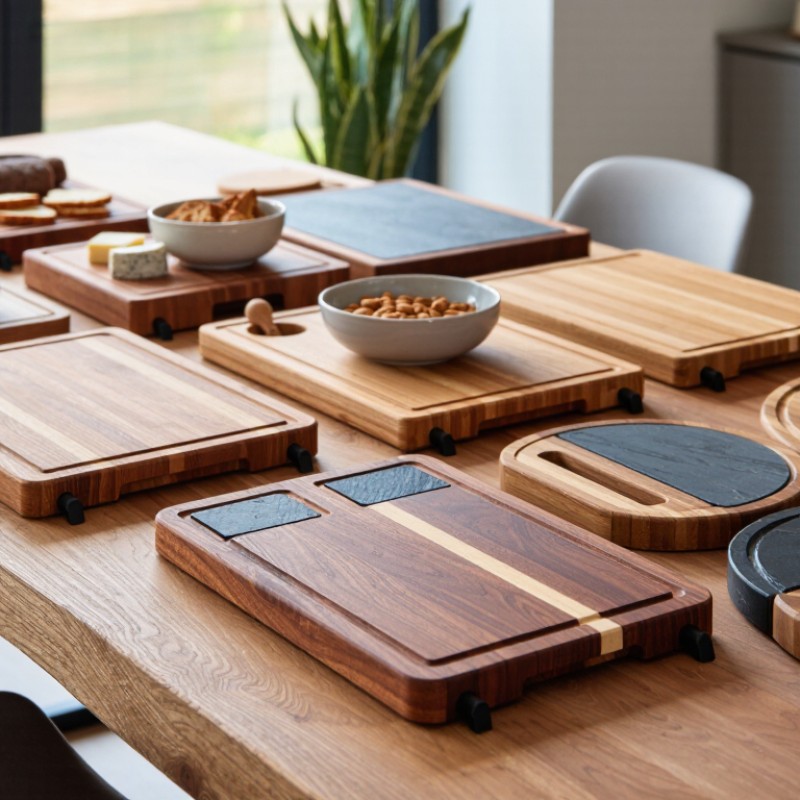
China Top 10 Wood Slate Serving Board Manufacturers

What Defines a High-Quality Wood and Slate Serving Board

A high-quality wood and slate serving board begins with materials that work well together. In experienced workshops, manufacturers inspect wood for cracks, knots, moisture, and unpleasant odors before shaping it. Stable hardwood usually performs better than soft, easily dented timber. The slate should have a smooth food-contact surface, consistent thickness, and carefully rounded edges. Small details matter.

Construction quality reveals more than appearance. Reliable boards use secure joints, even sanding, and finishes designed for food-contact use. The surface should feel smooth but not slippery under a cheese knife. A practical board also needs balanced weight, firm handles, and protective feet that prevent table scratches. Natural slate may show color variation. That is normal, not necessarily a defect. However, deep fractures and sharp chips should never be accepted.

Manufacturers in China and elsewhere should support these claims with production records, material checks, and repeatable inspection procedures. Useful evidence includes moisture testing, coating specifications, edge inspections, and packaging tests. A board that arrives warped cannot be called high quality, even if its photographs look impressive. Care instructions also deserve attention. Wood can absorb water, while slate can crack under sudden temperature changes. I have seen attractive boards fail because their surfaces were rushed. That weakness is easy to overlook during sampling, but repeated washing and daily serving will expose it. Good craftsmanship is visible in use.

Evaluation Criteria for China’s Leading Manufacturers

When evaluating China’s leading wood slate serving board manufacturers, buyers should examine materials, workmanship, and production consistency. A reliable supplier can identify the wood species, slate source, moisture level, and surface treatment used in each board. Clear documentation matters. Ask for product specifications, inspection records, and traceable batch information. Vague answers may indicate weak process control.

Practical experience reveals details that catalog photos often hide. Check whether the wooden frame feels smooth around the handle and edges. Inspect the slate for cracks, uneven thickness, or loose particles. Food-contact surfaces should be easy to clean and finished with suitable, clearly disclosed treatments. Manufacturers with professional quality teams usually explain their sanding, assembly, packaging, and inspection procedures. Request samples from different batches. One attractive sample proves little.

Production capacity also requires careful judgment. A large workshop may still struggle with stable quality during peak orders. Review equipment, worker training, defect handling, and lead-time records. Responsible manufacturers communicate limitations instead of promising everything. This is important. Certifications can support credibility, but they should match the actual product and issuing organization. Buyers should verify them independently. Some evaluation methods remain subjective, especially when natural slate varies in color and texture. That imperfection deserves written acceptance standards, not casual approval. Customer feedback, factory communication, and after-sales responses together provide stronger evidence of reliability than advertising claims.

China’s Top 10 Wood and Slate Serving Board Manufacturers

China’s top 10 wood and slate serving board manufacturers are gaining attention for practical design and consistent production. Many combine warm-grained wood with natural slate for contrast, texture, and everyday presentation. Their workshops often support private-label orders, custom sizes, engraved details, and retail-ready packaging.

Experienced manufacturers should explain wood species, slate thickness, moisture control, and surface finishing clearly. Reliable suppliers usually inspect boards for cracks, unstable edges, rough surfaces, and uneven polishing. Food-contact finishes must be suitable for kitchen use and supported by clear documentation. Sample testing matters. A board may look excellent in photos but feel too heavy or absorb oil quickly. That happened during one evaluation, and the supplier improved the sealing process after feedback.

Tips: Request samples from several manufacturers. Check the board’s weight, edge comfort, flatness, and odor. Rub a damp cloth across the surface. Ask how wood is dried and how slate is packed for shipping. Confirm carton protection before placing a large order. Also, discuss replacement procedures for damaged units. Small details protect margins.

A strong manufacturer should communicate realistic lead times, minimum order quantities, inspection methods, and customization limits. Production capacity is useful, but craftsmanship still matters. Some boards may show natural color variation, which can be attractive rather than defective. However, inconsistent sizing can create problems for retailers. Clear specifications and pre-shipment checks reduce that risk. My assessment is simple: compare evidence, not promises.

China Top 10 Wood Slate Serving Board Manufacturers - China’s Top 10 Wood and Slate Serving Board Manufacturers

No. Manufacturer Profile Primary Product Focus Common Wood Materials Slate Material Typical Sizes Surface Treatment Customization Options Typical MOQ Typical Lead Time
1 Manufacturer Profile 01 Wood and slate serving boards
Restaurant tableware
Acacia, rubberwood, bamboo, beech Natural black slate with split or honed edges 30 × 15 cm to 45 × 30 cm; custom dimensions available Food-grade mineral oil, beeswax, or water-based coating Laser engraving, logo printing, rope handles, juice grooves 300–500 pieces 25–40 days
2 Manufacturer Profile 02 Cheese boards
Charcuterie boards
Acacia, walnut, olive wood, rubberwood Natural slate inserts and removable slate plates Round, rectangular, and paddle styles from 25–50 cm Sanded surfaces with food-contact oil or wax finish Magnetic accessories, ceramic bowls, cutlery slots, gift boxes 500–1,000 pieces 30–45 days
3 Manufacturer Profile 03 Kitchen cutting boards
Serving platters
Bamboo, acacia, rubberwood, birch Calibrated slate panels suitable for food presentation 30 × 20 cm to 50 × 35 cm Multi-stage sanding, rounded corners, natural oil finish Handle shapes, engraved artwork, private-label packaging 500 pieces 25–35 days
4 Manufacturer Profile 04 Hotel and catering boards
Buffet presentation
Rubberwood, acacia, beech, pine Thick natural slate with anti-slip feet options 40 × 20 cm to 60 × 30 cm Commercial-use oil finish and moisture-resistant treatment Large-format boards, feet, handles, custom carton inserts 300 pieces 30–45 days
5 Manufacturer Profile 05 Eco-friendly tableware
Bamboo serving sets
Bamboo, FSC-type hardwood options, rubberwood Thin natural slate sheets combined with bamboo frames 25 × 15 cm to 40 × 25 cm Water-based coating or plant-based oil, depending on specification Recycled-paper packaging, engraving, sleeve design, set bundling 1,000 pieces 35–50 days
6 Manufacturer Profile 06 Premium gift sets
Wine and cheese boards
Walnut, acacia, beech, bamboo Honed slate with chalk-writing surface 30–45 cm boards; sets of 2–6 components Fine sanding, hand-oiled wood, polished slate edges Wine tool sets, ceramic cups, custom inserts, magnetic closures 300–800 sets 35–50 days
7 Manufacturer Profile 07 Retail-ready boards
Home dining accessories
Rubberwood, acacia, bamboo, poplar Standard black slate with natural texture Common retail sizes: 30 × 20 cm, 35 × 25 cm, 40 × 30 cm Machine sanding, food-grade oil, moisture-control packaging Barcode labels, color boxes, hang tags, logo engraving 1,000 pieces 30–45 days
8 Manufacturer Profile 08 Rustic farmhouse boards
Decorative serving trays
Reclaimed-look pine, fir, acacia, rubberwood Irregular-edge slate and framed slate panels Oval, round, and irregular forms from 28–48 cm Brushed, distressed, or smooth finish with food-safe top treatment Rope handles, vintage styling, custom stains, printed messages 500 pieces 30–45 days
9 Manufacturer Profile 09 Modern minimalist boards
Café and bakery presentation
Beech, birch, bamboo, acacia Uniform rectangular slate with smooth or natural edges 20 × 12 cm to 45 × 25 cm Fine matte sanding, clear food-contact oil, rounded profiles Geometric cutouts, engraved logos, stackable designs 500–1,000 pieces 25–40 days
10 Manufacturer Profile 10 Custom hospitality products
Promotional tableware
Acacia, rubberwood, bamboo, walnut veneer Slate tiles, inserts, and presentation plaques Custom sizes; standard ranges from 25–55 cm Food-grade oil, wax, or specified commercial coating OEM designs, branded packaging, custom sets, mixed-material products 300–1,000 pieces 30–50 days

Data note: The specifications shown are typical production ranges for Chinese wood and slate serving-board suppliers. Exact material availability, minimum order quantity, certification status, pricing, and delivery time should be confirmed against the final product specification and purchase order.

Materials, Craftsmanship, and Customization Options

China Top 10 Wood Slate Serving Board Manufacturers

Materials, Craftsmanship, and Customization Options

When comparing China’s top ten wood slate serving board manufacturers, material selection deserves close attention. Acacia, walnut, bamboo, and rubberwood offer different grains, weights, and price points. Natural slate adds a cool, dark surface with visible mineral variation. No two pieces look exactly alike. Buyers should request material samples, moisture-control details, and food-contact finish information before placing an order.

Craftsmanship often separates a dependable supplier from a decorative workshop. Experienced manufacturers inspect wood for cracks, uneven drying, and loose joints. They sand edges by hand or machine, then check the board for smooth handling. A stable slate insert should sit firmly without sharp gaps. Practical testing matters. Place a sample under light pressure, wipe it repeatedly, and inspect the finish after drying. Some suppliers provide useful documentation, but paperwork alone cannot replace physical samples.

Customization can include board dimensions, handle shapes, slate size, engraving, packaging, and gift-set combinations. Laser engraving produces clean detail, while deeper carving may collect food residue. That choice needs careful review. Manufacturers can also adjust colors, corner profiles, and protective feet for restaurant or household use. However, customization may increase lead times and minimum quantities. Small flaws sometimes remain in handmade edges. They may add character, but inconsistent flaws suggest weak quality control. A clear specification sheet, approved sample, and repeat inspection process help reduce surprises.

How to Choose the Right Chinese Manufacturer

Choosing among China’s top 10 wood slate serving board manufacturers requires more than comparing prices. Start with the product’s actual use. Ask about wood species, moisture control, slate thickness, edge finishing, and food-contact coatings. A sample reveals more than a polished catalog. Check its weight, smell, surface smoothness, drainage, and resistance to light washing. Small defects matter.

Request factory documents and recent production photos. Verify business registration, quality procedures, material traceability, and export experience for your destination market. Ask whether the wood comes from controlled sources and whether coatings meet applicable food-contact requirements. A capable supplier should explain testing methods without vague promises. Review batch inspection records, not only certificates. If possible, arrange a live video tour or an independent factory audit. Confirm monthly capacity, lead time, carton strength, and replacement terms in writing.

Communication is another practical test. Send a drawing with dimensions, engraving placement, tolerances, and packaging details. See how carefully the engineer responds. A low quotation may exclude mold fees, inner boxes, inspection, or shipping changes. Clarify every cost before approval. I would also order a small pilot batch. It may expose uneven engraving or warped boards. That is useful, even when inconvenient. Choose the manufacturer that documents corrections and repeats stable quality, not merely the one offering the fastest promise.

FAQS

What materials should buyers verify with a wood slate serving board manufacturer?

Ask for the wood species, slate source, moisture level, and surface treatment. The supplier should provide clear specifications and traceable batch information. Vague answers are warning signs. Materials can vary.

How can a sample reveal product quality?

Check the board’s weight, smell, smoothness, handle, and edge finishing. Inspect the slate for cracks, loose particles, and uneven thickness. Small defects matter. One attractive sample proves little.

What should buyers inspect on food-contact surfaces?

Surfaces should be easy to clean and finished with clearly disclosed treatments. Ask whether coatings meet applicable food-contact requirements. The supplier should explain testing methods without vague promises. Do not rely on appearance alone.

How can buyers assess production consistency?

Request samples from different batches and compare their dimensions, engraving, slate texture, and surface finish. Review recent inspection records and defect-handling procedures. Samples can disagree. That difference needs investigation.

What factory documents should buyers request?

Request material records, quality procedures, batch inspections, business registration, and recent production photos. Export experience may also matter for your destination market. Certificates should match the actual product and issuing organization. Verify them independently.

How can buyers judge production capacity?

Ask about monthly capacity, equipment, worker training, lead times, and peak-order performance. A large workshop may still produce uneven quality under pressure. Promises are not proof. Review past delivery records.

What details should be confirmed before placing an order?

Confirm dimensions, tolerances, engraving placement, packaging, carton strength, lead time, and replacement terms in writing. Clarify mold fees, inner boxes, inspections, and shipping changes. Hidden costs can appear later. Write everything down.

Why is a small pilot batch useful?

A pilot batch can expose warped boards, uneven engraving, weak packaging, or inconsistent slate thickness. It may feel inconvenient, but the evidence is useful. I would still test washing and handling carefully. Perfection is unlikely.

Conclusion

This guide explores what makes a high-quality wood slate serving board, focusing on durable materials, food-safe finishes, balanced construction, smooth edges, and practical design. It presents an evaluation framework for China’s leading manufacturers, including production experience, craftsmanship, quality control, customization capabilities, packaging, communication, and delivery reliability. The discussion also introduces ten representative manufacturer types without naming specific brands, helping readers understand the strengths commonly found across China’s serving board industry.

The article compares material combinations, surface treatments, engraving, size options, handle designs, and other customization choices available for a wood slate serving board. It also explains how buyers can select the right Chinese manufacturer by matching product requirements, order volume, budget, quality expectations, and intended market. By considering samples, certifications, inspection procedures, and after-sales support, purchasers can make a more informed decision and build a dependable long-term supply relationship.

Amelia

Amelia

Amelia is a professional marketing specialist with a strong understanding of product strategy, customer needs, and digital communication. As a dedicated member of the company’s marketing team, she combines market research, practical industry knowledge, and clear storytelling to create valuable......