
Discover expert insights, manufacturing processes, wood care guides, and industry trends from Thailand's leading OEM wooden kitchenware & furniture exporter.
Choosing a solid wood dining table in 2026 means looking beyond color and shape. The right choice should fit your room, daily habits, and willingness to care for natural wood. Measure the dining area, then leave enough space for chairs to pull back comfortably. A beautiful table that blocks a walkway may not feel beautiful for long.
George Nakashima, the renowned woodworker and furniture designer, is often quoted as saying, “The tree is our most intimate contact with nature.” That idea matters here. Grain, knots, and color variation are natural features, not defects in every case. Still, appearance alone cannot tell you how a table is built. Check whether the top, legs, and apron are solid wood, and ask about the wood species, joinery, finish, and care instructions. Solid wood also responds to changes in humidity, so sound construction should allow for seasonal movement.
Small details count. Run your hand along the underside and edges. Look for stable joints and a finish suited to meals, spills, and regular cleaning. Ask the seller what repairs are possible and what the warranty covers. Those answers may reveal more than polished product photos.
There is no universally perfect table. A pale oak top may show marks sooner than expected; a darker finish may need careful dusting. That can be inconvenient. This guide will help you compare practical trade-offs, question vague claims, and choose a solid wood dining table that suits your home—not just a showroom.
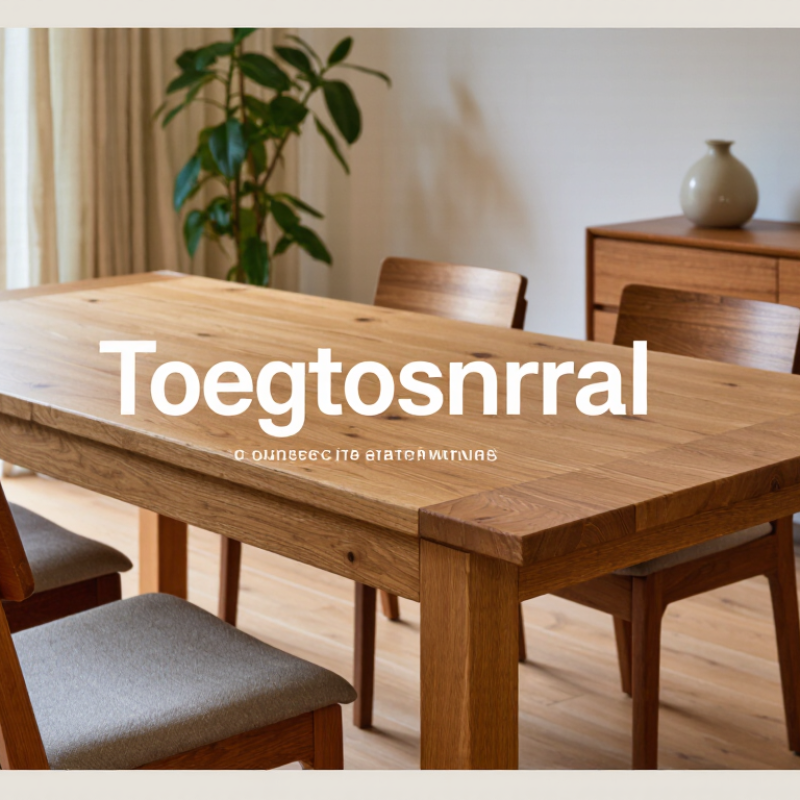
How to Choose a Solid Wood Dining Table in 2026?
Start with how you actually dine. A household of four may need room for six when friends visit, while daily meals may call for a compact shape. Allow about 24 inches of table edge per person for comfortable seating. Measure your room, including chair pull-out space; around 36 inches of clearance is a useful target, though a tight walkway may need more. Measure twice. A floor plan can look generous until chairs are in place.
Set a total budget, not just a table price. Include chairs, delivery, and occasional care supplies. Compare wood type, top thickness, joinery, and finish, and check whether the top, legs, and leaves are all solid wood. Product descriptions can use “wood” broadly, so ask for specifics. Solid wood can respond to changes in humidity, and small seasonal movement is normal. I would leave room in the budget for quality construction, but not assume the most expensive option suits every home.
Tips: Tape the table’s proposed dimensions on the floor and place a chair at each seat. Walk around the outline before ordering. If you host irregularly, consider an extension leaf and check where it stores. Keep notes on your measurements; it is easy to misremember a few inches.
A solid wood dining table should suit both your room and the way you use it. Oak is a dependable choice, with visible grain and good resistance to everyday wear. Hard maple has a tighter, quieter pattern and a firm surface, though dents can still happen. Walnut offers rich brown color and expressive grain, but it is usually softer than oak or maple. Pine feels lighter and often shows knots; its softer surface may collect marks sooner.
Grain changes a table’s character. Straight, even lines can make a large top feel calm, while sweeping cathedral patterns add movement. Quarter-sawn boards often show straighter grain and distinctive flecks, but appearance varies from board to board. Knots and color shifts are natural, not defects, unless they affect stability. A photo can hide those differences. Ask to see the actual top if consistency matters to you.
Durability depends on more than species. Board thickness, joinery, finish, and indoor humidity all matter. Check that legs feel steady and joints show no gaps. A durable finish helps resist spills, but standing water can still damage wood. Hardness charts are useful, yet they cannot predict every dent or scratch. It is easy to overvalue a flawless surface; a table is meant to be used. That matters. Before buying, compare a wood sample with your floor and note how its color shifts in daylight.
Compare wood species by Janka hardness, a measure of resistance to denting.
Hard maple and white oak rank highest among these species for dent resistance, while cherry and walnut are softer and may show wear more readily. Janka values are approximate and can vary by specimen and source; hardness is only one aspect of durability.
A solid wood table should feel quiet under pressure. Rest your palm on one corner and gently push sideways; noticeable rocking may point to loose joints, uneven legs, or a flexible frame. Inspect where the apron meets each leg. Tight, even shoulders and cleanly fitted mortise-and-tenon or dowel joints are reassuring, though a neat appearance alone cannot prove strength. Sit at the table and lean lightly on its edge. Feel the movement.
Check stability on a hard, level floor, then test the table with pressure near the center and corners. If it has extension leaves, open and close them several times. The USDA Forest Products Laboratory’s Wood Handbook reports that tangential shrinkage is often 1.5–2 times radial shrinkage from green to oven-dry, with variation by species. That difference helps explain why solid wood can move across the grain as indoor humidity changes. A tight-looking panel joint may shift later; inspect it again after the table has settled at home.
For the finish, view the top in raking light. Look for cloudy patches, rough edges, exposed end grain, and finish pooled around joints. Run a clean hand over the surface; it should feel even, not plasticky or gritty. Ask what finish was applied and how to repair small scratches. A little variation in grain is normal. A sticky patch is not.
A solid wood table should fit the room before it wins you over in a showroom. Measure the dining area, then mark the tabletop on the floor with painter’s tape. Leave about 36 inches (91 cm) between its edge and nearby walls or furniture where people need to pass. The National Kitchen & Bath Association’s Kitchen Planning Guidelines use a 36-inch walkway as a circulation benchmark. That guidance is for kitchen planning, not a universal dining-room rule, but it helps reveal cramped routes. Sit down, pull out a chair, and test the space. A tape measure can be humbling.
Choose shape around the room’s traffic. A rectangular table suits a long room and can sit parallel to its longest wall; a round table often softens a tight square room and avoids sharp corners in busy paths. As a practical starting point, allow roughly 24 inches of table edge per diner. A 72-by-36-inch table may seat six, but chair width and leg placement can change that. Check the actual dimensions, including the apron and legs. Solid wood tables can be heavy, so allow room to move chairs without scraping walls. The neat plan on paper may still feel awkward in use. Test the taped outline with chairs before ordering.
Use the room’s clear, usable dimensions—not just its overall floor area—to choose a table. The recommendations below assume at least 36 inches (91 cm) of clearance between the table edge and nearby walls or obstacles.
| Usable Room Size | Suitable Table Shape | Suggested Table Size | Typical Seating | Why It Works |
|---|---|---|---|---|
| 8 × 10 ft (2.4 × 3.0 m) | Rectangular or narrow oval | 30 × 48 in (76 × 122 cm) | 4 | A compact footprint suits a narrow dining area while preserving basic chair and walkway clearance. |
| 10 × 10 ft (3.0 × 3.0 m) | Round | 48 in (122 cm) diameter | 4 | A round top has no corners to navigate and leaves roughly 36 in (91 cm) around the table in a clear 10 ft square room. |
| 10 × 12 ft (3.0 × 3.7 m) | Rectangular | 36 × 72 in (91 × 183 cm) | 6; up to 8 for occasional use | The longer top fits the room’s proportions; six diners are more comfortable than squeezing in extra end seats. |
| 12 × 14 ft (3.7 × 4.3 m) | Rectangular or oval | 42 × 84 in (107 × 213 cm) | 6–8 | The larger footprint accommodates a generous tabletop and allows room for chairs and circulation when the space is unobstructed. |
| 12 × 12 ft (3.7 × 3.7 m) | Round | 60 in (152 cm) diameter | 6 | A 60-inch round table can seat six, but leaves about 42 in (107 cm) of clearance in each direction in a clear 12 ft square room. |
| Open-plan area or flexible dining space | Extendable rectangular or oval | Closed: 36 × 60 in (91 × 152 cm); open: about 36 × 78 in (91 × 198 cm) | 4–6 closed; 6–8 open, depending on chair width | An extension leaf adds seating when needed. Check that the room still has adequate clearance with the table fully extended. |
| Planning Detail | Practical Guideline |
|---|---|
| Clearance around the table | Allow at least 36 in (91 cm) from the table edge to a wall or obstacle. About 42–48 in (107–122 cm) is more comfortable where people need to pass behind seated diners. |
| Space per diner | Plan roughly 24–26 in (61–66 cm) of table edge per person for everyday seating; allow more for wider chairs or a roomier setting. |
| Rectangular tables | Work well in long rooms and can be placed against a wall when not in use. Measure the space needed for chairs at both ends if you plan to seat diners there. |
| Round tables | Suit square rooms and encourage conversation. As diameter increases, reaching across the center becomes less convenient, so avoid choosing a size based only on seat count. |
| Oval tables | Offer a longer seating edge like a rectangular table, with rounded ends that can make movement around the corners easier. |
| Solid wood tabletop | Solid wood responds to changes in humidity and temperature. Leave adequate space around the table, follow the maker’s care guidance, and avoid placing it directly beside strong heat sources. |
Dimensions are general planning estimates, not fixed seating limits. Before buying, measure the room with doors, cabinets, radiators, walkways, and chair pullback in mind; then confirm the table’s actual dimensions.
When choosing a solid wood dining table, ask what species it is and where the timber was sourced. A seller should be able to explain whether the wood is locally harvested, reclaimed, or imported, and provide details beyond vague claims like “responsibly sourced.” Check whether the tabletop is solid wood throughout or includes veneer; both can be useful, but they are not the same. If documentation is unavailable, treat that as a reason to ask more questions, not proof of poor quality.
Read the warranty before paying. Confirm what it covers, how long coverage lasts, and whether repairs, transport, or finish damage are excluded. Wood naturally responds to humidity, so a small seasonal change may not count as a defect. Ask how the table should be cleaned and whether it needs periodic oiling or waxing. A damp cloth may be enough for one finish; another could be damaged by the same routine. I’d be careful not to assume a higher price guarantees easier care. That assumption is tempting, but not always useful.
Tips: Request the care guide in writing. Check the table’s recommended humidity range, keep hot pans off the surface, and wipe spills promptly. Small print matters. If the answers feel unclear, pause before ordering.
Leave about 36 inches between the table edge and nearby walls or furniture along walking routes. Mark the tabletop on the floor with painter’s tape, then pull out a chair to test the space. Small test, big difference.
A rectangular table often suits a long room and can run parallel to its longest wall. A round table can soften a tight, square room and avoid sharp corners in busy paths.
Allow roughly 24 inches of table edge per diner. A 72-by-36-inch table may seat six, but chair width and leg placement affect comfort.
Check the tabletop, apron, and legs, not just the listed top dimensions. Make sure chairs can move without scraping walls. A paper plan can still feel awkward.
Ask which wood species the table uses and whether the timber is local, reclaimed, or imported. Request specific sourcing details instead of relying on vague claims.
No. Veneer and solid wood are different constructions, though either may suit your needs. If documentation is missing, ask follow-up questions rather than assuming the worst.
Confirm how long coverage lasts and whether it includes repairs, transport, or finish damage. Wood responds to humidity, so seasonal changes may not qualify as defects.
Request written care instructions and check the recommended humidity range. Keep hot pans off the surface and wipe spills promptly. Cleaning depends on the finish; a damp cloth can harm some surfaces. A higher price does not always mean easier care. I’d keep that in mind.
Choosing a solid wood dining table in 2026 starts with understanding how you eat, entertain, and use your space. Set a realistic budget, measure the room, and allow enough clearance for chairs and walkways. Consider how different wood species vary in grain, color, hardness, and resistance to everyday wear, then select a finish that suits your preferred look and maintenance routine.
Before buying, check that the table feels stable and that its joints are carefully constructed. Match its shape and size to your room and seating needs, whether you prefer a compact round table or a larger rectangular design. Finally, ask about the wood’s sourcing, review the warranty, and understand the care required to protect the surface over time. These practical checks can help you choose a table that fits your home and remains useful for years.