
0%

Choosing the best OEM wooden kitchenware supplier in China requires more than comparing catalog prices. It demands evidence, factory experience, and careful product verification. Wooden spoons, cutting boards, trays, and serving tools may look simple. Their quality depends on timber selection, moisture control, machining accuracy, coating safety, and packaging discipline.

Industry data supports this growing opportunity. Euromonitor International’s 2024 Home and Garden research identifies continuing consumer interest in natural materials, practical design, and durable household products. Grand View Research also reports sustained growth across global kitchenware demand, driven by home cooking, replacement purchases, and online retail. These reports do not prove that every wooden product will succeed. They show why supplier selection deserves closer attention.

A reliable OEM wooden kitchenware partner should provide traceable wood sources, documented production controls, and samples matching mass production. FSC certification may support responsible forestry claims, but buyers should verify certificate validity and product scope. Food-contact finishes also require appropriate testing for the destination market. Intertek, SGS, and TÜV laboratories can support independent inspection, although testing alone cannot replace factory experience.

Look closely at the details. Are cutting-board edges smooth? Is the handle balanced? Does the surface remain dry after repeated washing? Can the supplier maintain color consistency across 5,000 units? These questions reveal more than polished brochures.

Price matters. It is not everything.

A supplier may offer low quotations while creating hidden costs through uneven sanding, late revisions, weak cartons, or inconsistent engraving. That is where buyers often misjudge the “best” option. This guide examines China’s leading OEM wooden kitchenware suppliers through capabilities, certifications, customization, communication, production reliability, and total purchasing risk. Some conclusions may remain imperfect, because supplier performance can change between audits, seasons, and orders.
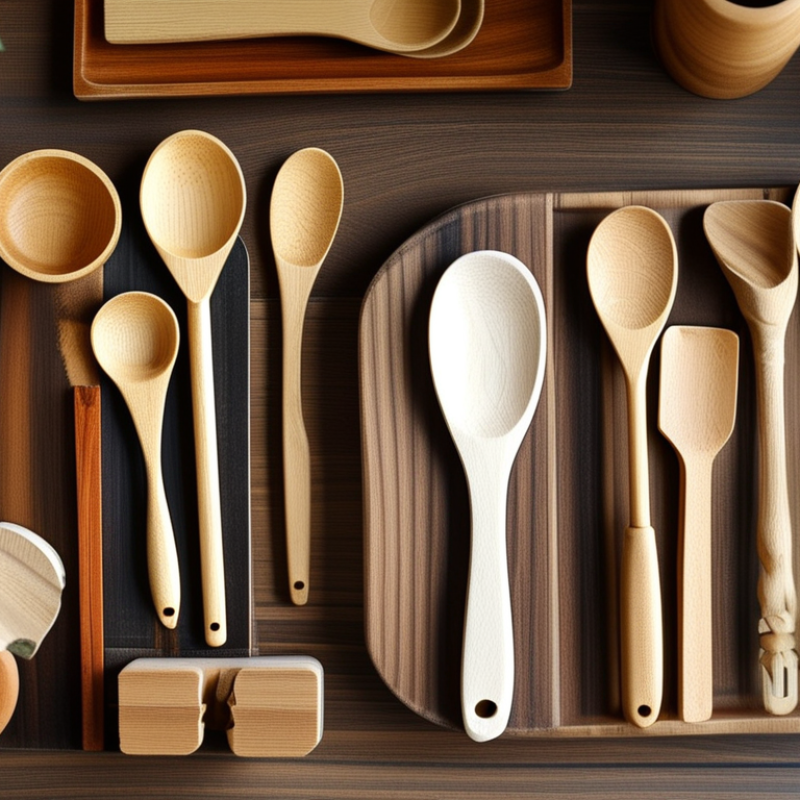
What Is the Best OEM Wooden Kitchenware Supplier in China?

Define “Best” Through Food-Safety, Quality, Cost, and OEM Metrics

What Is the Best OEM Wooden Kitchenware Supplier in China?

The best supplier is not always the cheapest one. Food safety should lead every OEM decision. Ask for wood species, sourcing records, moisture-control procedures, and finish specifications. The supplier should explain whether coatings are suitable for food contact. Request recent test reports from independent laboratories. Samples must be checked for odor, splinters, cracks, rough edges, and uneven surfaces. A clean factory is useful evidence, but documented controls matter more.

Quality also depends on repeatability. Compare sample dimensions with production tolerances, packaging strength, logo accuracy, and color consistency. Ask how defects are recorded and corrected. A pilot order can expose problems before a large shipment. However, a pilot is not perfect. Seasonal wood movement may create later changes. This risk deserves discussion, not polite silence. Cost should include tooling, sampling, packaging, inspection, shipping, and possible rework. A low unit price can become expensive after delays or rejects.

Tips: Build an OEM scorecard with food-safety evidence, defect rate, minimum order quantity, lead time, payment terms, and communication speed. Visit the workshop when possible, or use an independent inspection service. Ask for production photos with timestamps. Confirm that the supplier can reproduce your approved sample, not merely produce a beautiful first piece. The strongest partner welcomes difficult questions and admits limitations. That is often more reliable than impressive promises.

What Is the Best OEM Wooden Kitchenware Supplier in China?

A practical evaluation model defines “best” through food safety, quality consistency, total cost, and OEM execution capability. The weighting below is an illustrative procurement framework rather than a ranking of any company.

How to read the chart: Food safety receives the highest weight because wood is a direct food-contact material. Quality covers material consistency, workmanship, durability, and inspection controls. Cost includes tooling, unit price, packaging, logistics, and total landed cost. OEM capability measures customization, sampling speed, production capacity, documentation, and delivery reliability.

Compare FSC Chain-of-Custody, ISO 9001, FDA, and LFGB Compliance

What Is the Best OEM Wooden Kitchenware Supplier in China?

Choosing an OEM wooden kitchenware supplier requires more than checking price and production photos. FSC Chain-of-Custody certification shows how certified wood moves through harvesting, processing, storage, and shipment. Ask for the certificate scope and transaction records. A supplier using bamboo, rubberwood, or beech should identify each material clearly. Mixed materials can make traceability difficult.

ISO 9001 reflects a controlled quality management system, not automatic food-contact safety. During an audit, review incoming wood inspection, moisture checks, sanding standards, and coating controls. Factory records should connect a sample to its production batch. Small details matter. Gaps happen. They need correction.

FDA compliance usually refers to meeting United States food-contact requirements through suitable materials, coatings, and test evidence. LFGB requirements are associated with German and wider European food-contact expectations. Neither label should be accepted without current laboratory reports. Request migration testing, odor and taste evaluations, and coating declarations. Test the finished spoon or board, not only its raw coating. Ask whether reports match your exact design, finish, and intended use.

An experienced supplier should explain these differences without vague promises. They should also provide corrective-action records when testing fails. That honesty is valuable. No certificate can replace physical inspections, random sampling, and clear communication. Wooden products absorb moisture, change color, and may develop rough edges if drying is poorly controlled. A careful sourcing decision examines both documents and the item in your hand.

Verify 8–12% Wood Moisture, Finish Safety, and Defect-Rate Controls

What Is the Best OEM Wooden Kitchenware Supplier in China?

Moisture is the first control I check. A reliable OEM supplier should measure wood moisture between 8% and 12% before machining and packing. This range helps reduce warping, cracking, and loose joints during transport. Ask to see meter readings from several batches, not one impressive sample. The factory should record readings by date, operator, and product code. Small details matter. I prefer random checks from the center and edges of boards, because surface readings can look acceptable while inner wood remains damp.

Finish safety requires more than a smooth appearance. Request the coating specification, curing process, and food-contact safety documents required for your target market. Check whether the finish leaves a strong odor after curing. A responsible supplier can explain sanding grades, oil application, drying time, and rework procedures without vague promises. Sample testing is useful, but production samples deserve equal attention. Colors may shift slightly between batches. That is easy to overlook.

Defect-rate controls show how seriously a supplier manages quality. Review inspection records for splinters, stains, cracks, uneven coating, poor engraving, and dimensional errors. Ask how defects are classified and corrected. A practical system includes incoming material checks, in-process inspections, final sampling, and corrective-action reports. Do not accept a perfect defect-rate claim without evidence. In my experience, honest factories report recurring problems and show what changed. Some controls still fail occasionally. That weakness should be discussed openly, then monitored through the next production run.

Benchmark MOQ, 30–60-Day Lead Times, Tooling Fees, and Unit Costs

What Is the Best OEM Wooden Kitchenware Supplier in China?

A practical OEM benchmark starts with MOQ, not catalog variety. For wooden spatulas, 1,000–3,000 pieces is common. Complex gift sets may require 5,000 pieces. Small orders often increase unit costs sharply. Current sourcing quotations place simple bamboo utensils near $0.45–$1.20 each. Acacia boards commonly reach $3–$9, depending on size, finish, and packaging. These are indicative FOB ranges, not promises.

Lead times usually run 30–60 days after artwork approval and deposit payment. Sampling may add 7–15 days. Custom handles, laser patterns, and fitted cartons can require tooling fees from $300 to $2,500. Ask whether the fee is refundable after production. Some suppliers say yes, but the written quotation matters more. Production experience shows that moisture testing and edge inspection prevent many avoidable complaints.

UN Comtrade classifies many wooden kitchen articles under HS 4419, which combines several product types. That makes direct price comparisons imperfect. Grand View Research also identifies material, customization, and distribution as major kitchenware cost factors. Therefore, compare identical specifications, not attractive headline prices. Request material species, moisture percentage, coating details, carton strength, and inspection records. A supplier offering the lowest MOQ may lack stable finishing capacity. That can delay a launch. I have seen buyers overlook packaging volume, then discover freight costs erased the original saving.

What Is the Best OEM Wooden Kitchenware Supplier in China? - Benchmark MOQ, 30–60-Day Lead Times, Tooling Fees, and Unit Costs

Supplier Profile Primary Wood & Finish Typical MOQ Production Lead Time Tooling Fee Estimated Unit Cost* Sample Lead Time Private Label Capability Best Fit
Profile A — Small-Batch Specialist Rubberwood or beech; food-safe oil 300–500 pcs 30–40 days $80–$250 $1.80–$3.80 7–12 days Logo engraving, sleeve, sticker Start-ups and test launches
Profile B — Standard OEM Producer Acacia or bamboo; mineral oil and wax 500–1,000 pcs 35–50 days $150–$500 $2.20–$5.20 10–15 days Engraving, color box, barcode label Most retail and e-commerce orders
Profile C — Premium Hardwood Manufacturer Walnut, maple, or cherry; natural hardwax oil 500–1,500 pcs 45–60 days $250–$900 $5.50–$14.00 12–20 days Laser engraving, premium packaging, inserts Premium gifting and hospitality
Profile D — High-Volume Factory Bamboo or rubberwood; water-based coating 2,000–5,000 pcs 40–55 days $300–$1,500 $1.20–$3.00 10–18 days Multi-color printing, molded packaging, retail cartons Large-volume retail programs
Profile E — Custom Design Partner Beech, ash, or acacia; custom stain or paint 1,000–2,000 pcs 45–60 days $500–$2,000 $3.50–$9.50 15–25 days CAD support, prototypes, custom inserts Complex shapes and differentiated products

Cost and lead-time assumptions

*Unit costs are indicative China OEM export ranges in USD per piece for standard kitchenware such as spatulas, spoons, serving boards, trays, and small organizers. Final prices vary with dimensions, wood grade, moisture control, finish, packaging, order quantity, inspection requirements, and shipping terms.

Tooling fees generally apply to new molds, custom cutting fixtures, shaped components, or special packaging. Simple laser engraving and basic logo artwork may be included or charged separately.

Lead times normally begin after artwork, specifications, sample approval, deposit, and raw-material availability are confirmed. Freight transit time, customs clearance, and third-party testing are excluded.

Select Suppliers Using Audits, Samples, Production Capacity, and Export Data

What Is the Best OEM Wooden Kitchenware Supplier in China?

Choosing the best OEM wooden kitchenware supplier requires more than comparing prices. Begin with a structured factory audit. Check production areas, wood storage, finishing rooms, quality records, and worker training. Ask how the supplier controls moisture, cracking, splinters, and dimensional changes. Food-contact materials also require clear documentation and traceability. A polished showroom is useful, but it proves very little.

Order samples before discussing large quantities. Test the spoon, board, or tray for smoothness, weight, odor, coating consistency, and packaging strength. Compare samples against your drawings and approved materials. Then inspect production capacity. Review equipment, daily output, staffing, maintenance, and subcontracting practices. Export data can reveal experience with similar products, shipment frequency, destination markets, and seasonal delays. Still, export records may not show current capacity. This is easy to overlook.

Tips: Request a small pilot order. Use a written inspection checklist. Confirm lead times in writing. Ask for recent, verifiable export evidence. Compare at least three suppliers. Do not trust capacity claims without production records. A supplier may pass an audit yet struggle with custom packaging or peak-season demand. That gap deserves attention.

FAQS

What makes an OEM wooden kitchenware supplier reliable?

Food safety should guide the decision. Ask for wood species and sourcing records. Request recent independent laboratory reports. The supplier should explain its finish specifications clearly. Low prices alone are not enough.

What wood moisture level should the supplier maintain?

Target moisture should stay between 8% and 12%. The supplier should test several batches before machining and packing. Ask for readings by date, operator, and product code. Check board centers and edges. Surface readings can mislead.

How can I evaluate finish safety?

Request coating details, curing procedures, and food-contact documents. Ask about sanding grades, oil application, drying time, and rework. A strong odor after curing needs investigation. A smooth surface proves little.

Which defects should production inspections identify?

Inspections should cover splinters, cracks, stains, rough edges, and uneven surfaces. They should also check dimensions, engraving accuracy, and coating consistency. Ask how workers classify and correct defects. Some controls still fail occasionally.

How can I test whether production matches the approved sample?

Compare dimensions, colors, logo placement, packaging strength, and surface quality. A pilot order can reveal hidden problems before a larger shipment. It is helpful, not perfect. Seasonal wood movement may create later changes.

What costs should an OEM buyer calculate?

Include tooling, samples, packaging, inspection, shipping, and possible rework. A low unit price may become expensive after delays or rejected goods. Calculate the whole shipment. Not just one piece.

What records should a supplier provide?

Request material checks, moisture readings, inspection records, and corrective-action reports. Production photos with timestamps can support communication. Independent inspection may provide stronger evidence. Do not trust perfect claims without records.

How should I compare several suppliers?

Use a scorecard covering safety evidence, defect rates, minimum order quantity, lead time, and payment terms. Add communication speed and sample repeatability. Visit the workshop when possible. I would also record unanswered questions. That detail is easy to forget.

Conclusion

Choosing the best OEM wooden kitchenware supplier in China requires more than comparing prices. A reliable supplier should demonstrate strong food-safety practices, consistent product quality, transparent OEM capabilities, and competitive costs. Buyers should verify FSC chain-of-custody documentation, ISO 9001 quality management, and compliance with applicable FDA and LFGB requirements. They should also confirm that wood moisture is maintained around 8–12%, finishes are food-safe, and production teams use documented inspections to control defects.

Commercial terms are equally important. Compare minimum order quantities, typical 30–60-day lead times, tooling or mold fees, packaging options, and unit costs based on realistic order volumes. Before making a decision, conduct factory audits, review product samples, assess production capacity, and examine relevant export experience. A supplier that communicates clearly, provides traceable documentation, manages quality consistently, and supports customization is more likely to deliver dependable OEM wooden kitchenware for long-term business growth.

Charlotte

Charlotte

Charlotte is a dedicated marketing professional who combines strategic insight, industry knowledge, and a strong understanding of customer needs. As a key contributor to our company, she regularly researches market trends, follows industry developments, and creates clear, informative blog content......